LakeFreeze Editorial Team

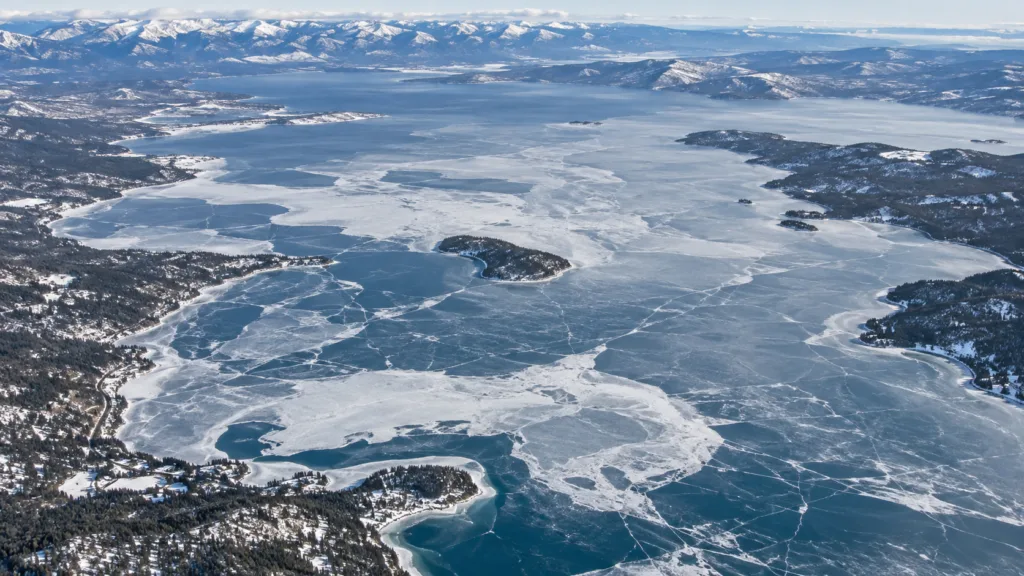
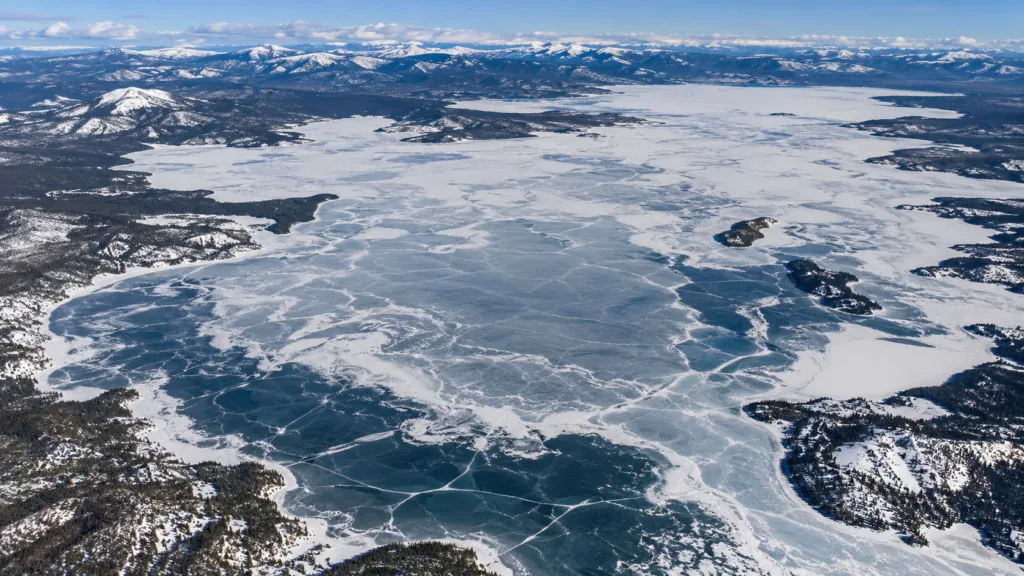
Flathead Lake freeze shows the gradual thickening of ice as temperatures drop during the winter season.

Flathead Lake Freeze

Flathead Lake usually remains open across its main basin through winter. Ice forms more readily in bays and along sheltered shoreline, while a lake-wide freeze requires an unusually long spell of deep cold with little wind. Complete ice cover belongs to exceptional winters rather than the lake’s normal seasonal cycle. A deep, moving lake resists
Flathead Lake Freeze Read More »

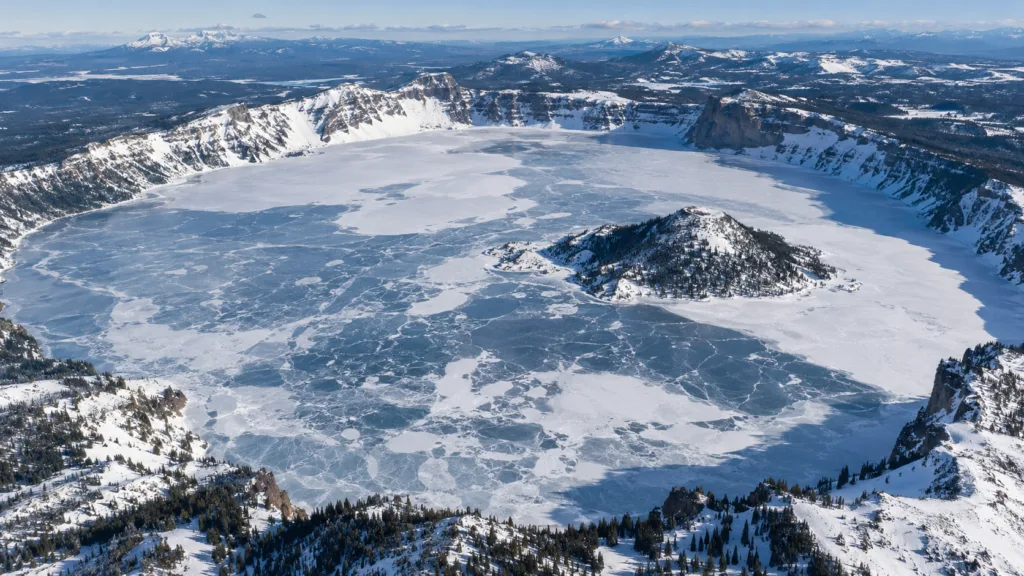
Crater Lake freeze, showing the lake's surface covered with ice and snow during winter cold conditions.

Crater Lake Freeze

Crater Lake normally remains largely open through winter even while deep snow accumulates around the caldera. A complete lake-wide freeze requires conditions far beyond an ordinary snowy winter: the National Park Service reports that the lake has not frozen over completely since 1949. Short-lived skim ice is a different phenomenon and can appear on calm

Crater Lake Freeze Read More »

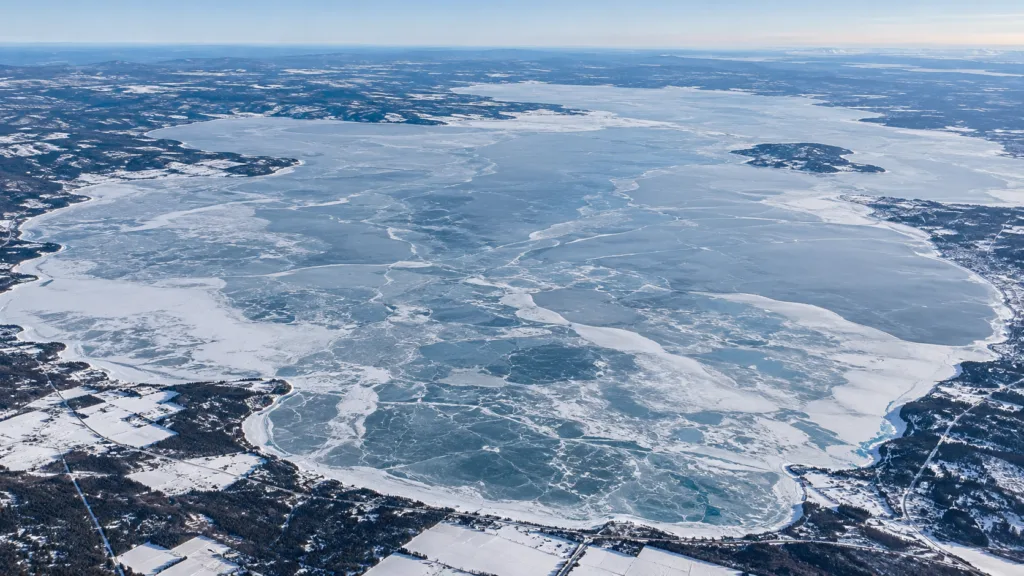
Yellowstone Lake is frozen over during winter, showing the typical timing of lake freezing in cold conditions.

Yellowstone Lake Freeze

Yellowstone Lake normally develops complete seasonal ice cover rather than merely freezing along its shoreline. Its long observational record places ice-on near the end of December on average and breakup in late spring, but individual winters can depart substantially from those averages. Why such a large lake can still freeze completely Yellowstone Lake combines substantial

Yellowstone Lake Freeze Read More »

Lake Tahoe freeze shows the lake covered with a layer of ice, indicating cold winter temperatures and the lake's seasonal freezing point.

Lake Tahoe Freeze

Lake Tahoe’s main basin does not develop seasonal whole-lake ice cover. Even during the cold 2022–23 winter, when Emerald Bay froze completely and ice appeared in marinas and shoreline pockets, the open lake itself remained unfrozen. Why the main lake stays open through winter Lake Tahoe has the geometry of a lake that stores a

Lake Tahoe Freeze Read More »

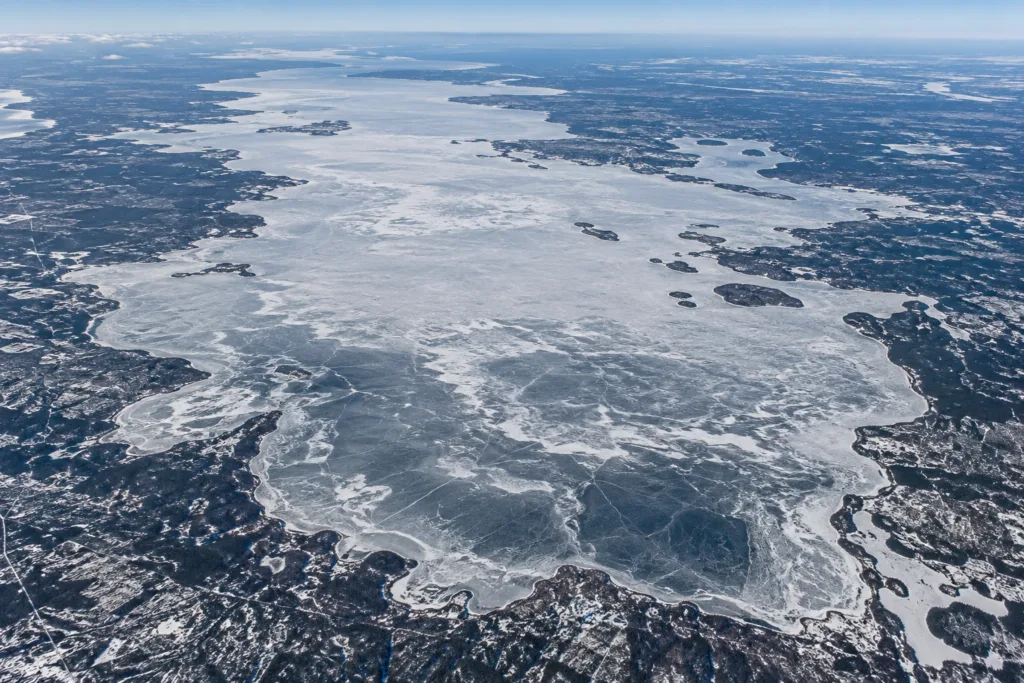
Lake Winnipeg is frozen during the lake winnipeg freeze, with a thick layer of ice covering most of the surface in cold winter conditions.

Lake Winnipeg Freeze

Lake Winnipeg normally develops complete seasonal ice cover, but its north and south basins do not shed that ice at the same pace. Autumn freezing is closely synchronized across the lake; spring breakup stretches longer in the deeper north basin, so a single “ice-off date” can hide a multi-week spatial transition. Why spring breakup separates

Lake Winnipeg Freeze Read More »

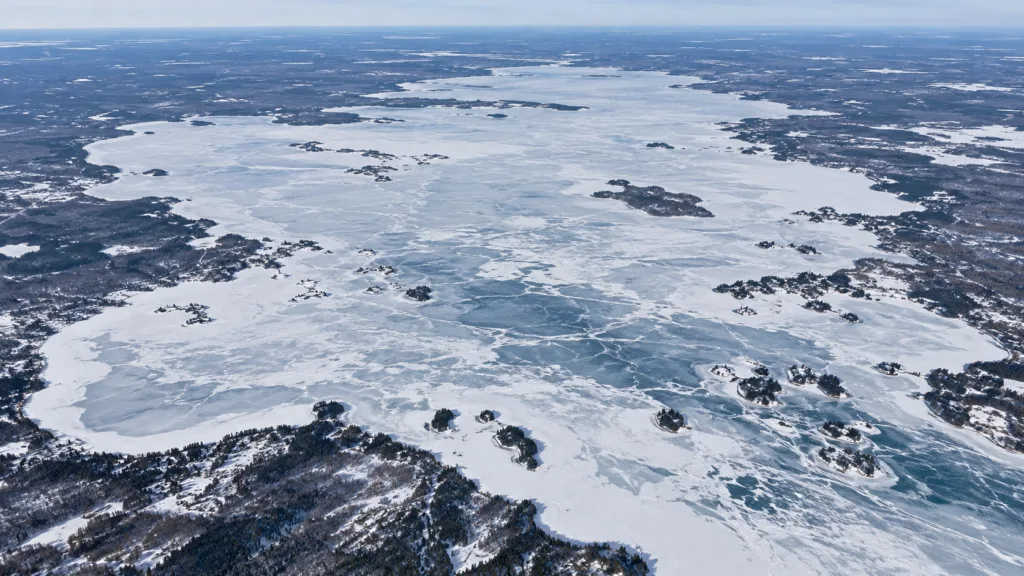
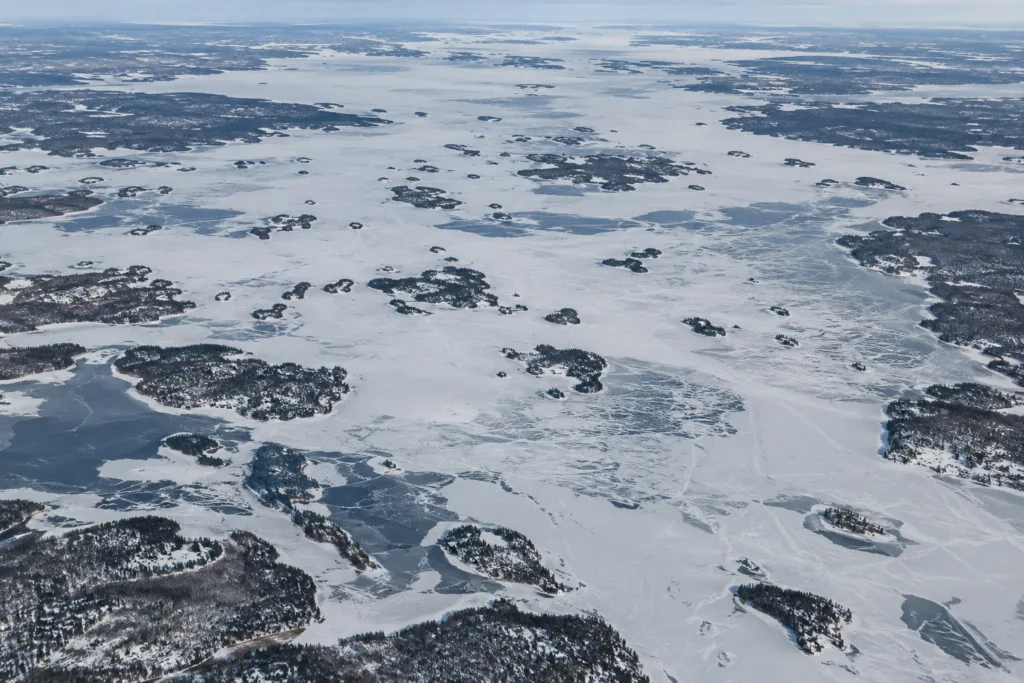
Lake Nipissing freeze shows the lake covered in snow and ice, indicating it is in the early or peak phase of freezing during winter.

Lake Nipissing Freeze

Lake Nipissing regularly develops complete seasonal ice cover, but its historical freeze date refers to whole-lake freeze-over rather than the first ice appearing along a shoreline or inside a sheltered bay. The record centers complete closure in early December and complete ice loss in late April, with enough year-to-year variation that neither boundary should be

Lake Nipissing Freeze Read More »

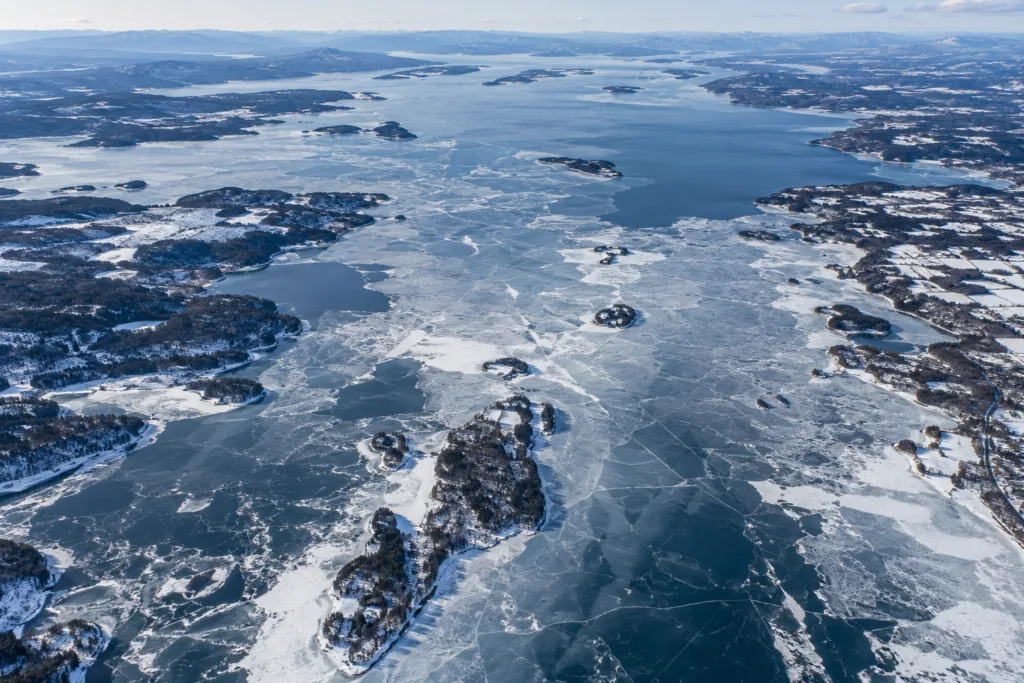
The lake Athabasca freeze shows a thick layer of ice covering the surface during winter months.

Lake Athabasca Freeze

Lake Athabasca normally develops complete seasonal ice cover. Ice formation begins during autumn, but the lake does not reach complete freeze-over at the moment the first ice appears. Environment Canada places the start of freeze-up in mid- to late October, with completion by mid-December. In spring, opening begins first at the western end, while complete

Lake Athabasca Freeze Read More »