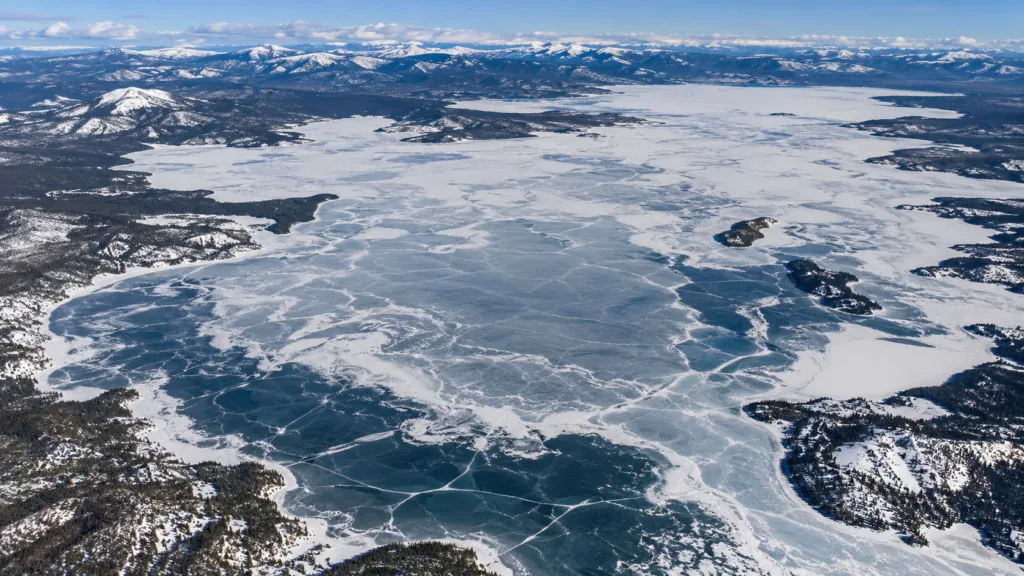
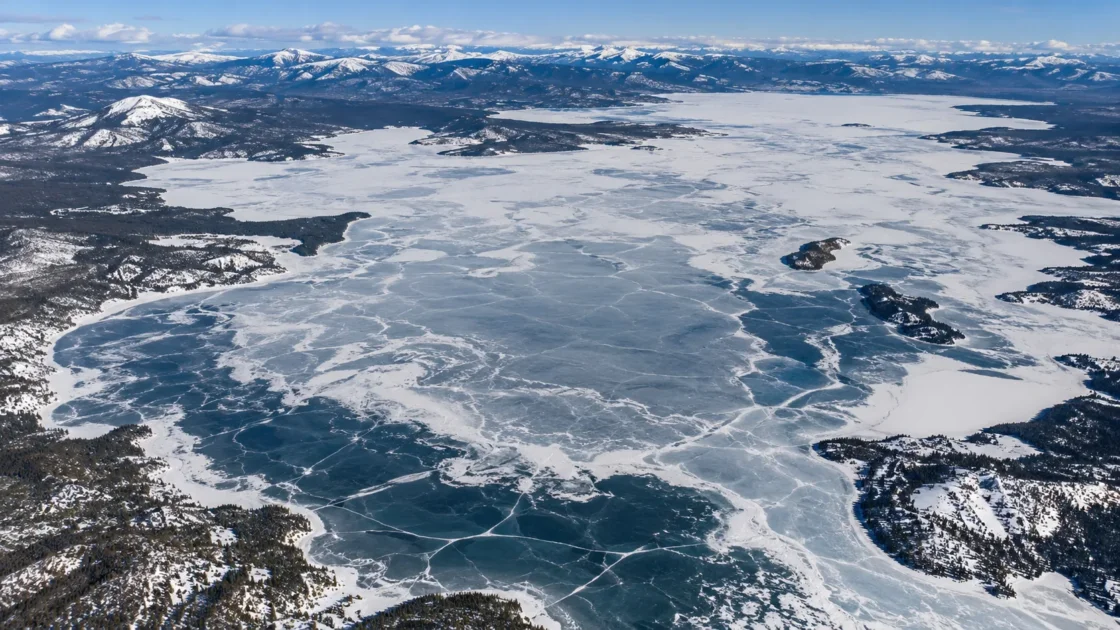
Complete seasonal freeze-over
Official Park Record and Peer Reviewed Ice PhenologyNational Park Service — Yellowstone LakeTronstad et al. — Despite a Century of Warming, Increased Snowfall Has Buffered the Ice Phenology of North America’s Largest High-Elevation Lake Against Climate ChangeEvidence: HighCold high-elevation winters support complete seasonal ice cover, while fall temperatures influence ice-on and spring temperature and snowfall strongly affect breakup timing.
Where Is Yellowstone Lake?
Wyoming · United States
Yellowstone Lake on the Globe
Rotate the world or focus directly on the lake.
Measured Ice and Freeze Data
Freeze and Ice Cover Through the Year
Month-level states are shown only when supported. Unclassified months remain explicitly marked.
Evidence Behind the Freeze Profile
The National Park Service describes complete freeze-over each winter, generally occurring in late December or early January.
Official Park RecordNational Park Service — Yellowstone LakeEvidence: HighThe 1927–2022 analysis found a mean duration of 147 days, with observed durations ranging from 111 to 185 days.
Peer ReviewedTronstad et al. — Despite a Century of Warming, Increased Snowfall Has Buffered the Ice Phenology of North America’s Largest High-Elevation Lake Against Climate ChangeEvidence: HighStatistical analysis found no significant long-term shift in ice-on date, ice-off date, or duration across the study record.
Peer ReviewedTronstad et al. — Despite a Century of Warming, Increased Snowfall Has Buffered the Ice Phenology of North America’s Largest High-Elevation Lake Against Climate ChangeEvidence: HighThe study linked later spring breakup with greater spring snowfall and concluded that increased fall and spring snow has counteracted part of the effect of regional warming.
Peer ReviewedTronstad et al. — Despite a Century of Warming, Increased Snowfall Has Buffered the Ice Phenology of North America’s Largest High-Elevation Lake Against Climate ChangeEvidence: HighPeer-reviewed research documents numerous hydrothermal features beneath Yellowstone Lake, while the park record independently documents complete winter freeze-over.
Peer Reviewed and Official Park RecordNational Park Service — Yellowstone LakeSohn et al. — Observations and Modeling of a Hydrothermal Plume in Yellowstone LakeEvidence: HighSources
Yellowstone Lake normally develops complete seasonal ice cover rather than merely freezing along its shoreline. Its long observational record places ice-on near the end of December on average and breakup in late spring, but individual winters can depart substantially from those averages.
Why such a large lake can still freeze completely
Yellowstone Lake combines substantial size and depth with an unusually cold setting. The lake lies about 2,357 meters above sea level, where prolonged winter cold is sufficient to remove stored heat from the water column and eventually establish continuous surface ice. This distinguishes it from many large, deep lakes at lower elevations where winter heat loss may be insufficient for regular lake-wide freeze-over.
The transition is not tied to a fixed calendar date. The century-scale record shows ice-on varying from early December into late January. Warmer autumn and early-winter conditions tend to delay formation, so the late-December average represents the center of a variable seasonal process rather than a dependable annual deadline.
The spring snowpack helps control when the ice disappears
Breakup responds to more than rising air temperature. The long-term analysis found spring snowfall to be an important control on Yellowstone Lake’s ice-off timing, with snowier springs associated with later breakup. Snow lying on the ice can alter the surface energy balance and delay the transition toward open water.
This interaction helps explain one of the lake’s most unusual findings. Regional temperatures have risen, yet the 1927–2022 record showed no statistically significant shift toward later ice-on, earlier ice-off, or a shorter ice season. The research concluded that increases in fall and spring snowfall have so far buffered the lake’s ice phenology against part of the warming signal.
A stable average does not mean every winter looks the same
The absence of a century-scale trend should not be read as evidence of identical winters. Ice duration in the study record ranged from 111 to 185 days, while the observed ice-on and ice-off dates also covered wide ranges. Air temperature, snowfall and the sequence of weather conditions before formation and breakup create substantial year-to-year variability even when the long-term statistical trend remains nearly flat.
This distinction is important for interpreting the 147-day mean duration. It describes the long observational record, not the expected duration of every individual winter.
Hydrothermal heat exists beneath a lake that still freezes over
Yellowstone Lake is hydrothermally active. Research has mapped numerous vents and other thermal features beneath the lake, particularly within its northern intracaldera region. Some discharge water at very high temperatures deep below the surface.
That geothermal setting does not translate into a generally ice-free lake. The National Park Service’s lake-wide observations show regular complete winter freeze-over. The two facts describe different spatial scales: hydrothermal heat is concentrated around particular lake-floor systems, while seasonal ice formation reflects the energy balance of the lake surface as a whole.
What the century-long record actually measures
Yellowstone Lake has an unusually valuable observational history. Ice-off observations extend back to 1927 and ice-on observations to the early 1930s, providing many decades of direct phenological evidence rather than a freeze pattern inferred solely from modern satellite imagery or a handful of recent winters.
In the published 1927–2022 analysis, the mean ice-on date was December 27 and the mean ice-off date was May 24. The earliest and latest observations were separated by several weeks in both parts of the season. That record supports a clear description of Yellowstone Lake as a regularly and completely freezing lake, while also showing why freeze-up and breakup are better represented as seasonal windows than as fixed annual dates.
Similar Lakes by Freeze Pattern
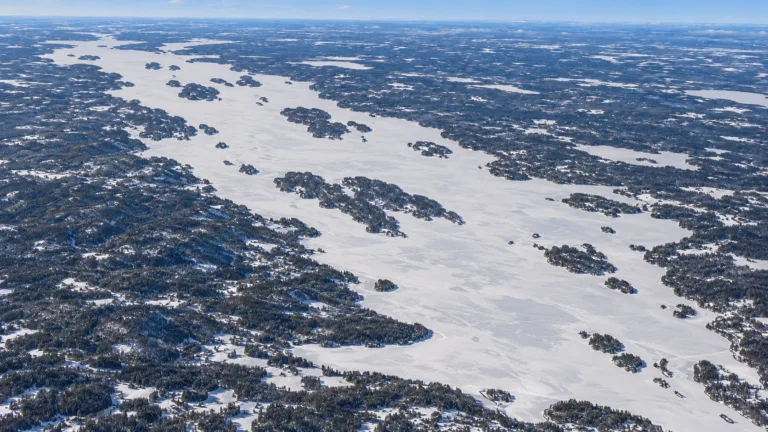
Lake Pielinen Freeze
Usually Fully Freezes
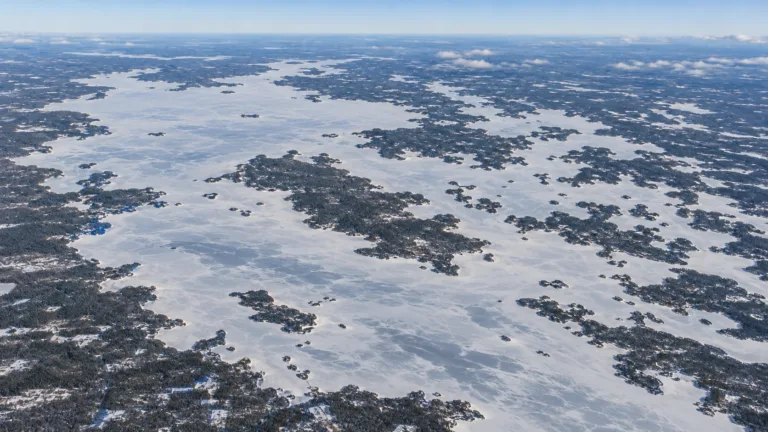
Lake Oulujärvi Freeze
Usually Fully Freezes
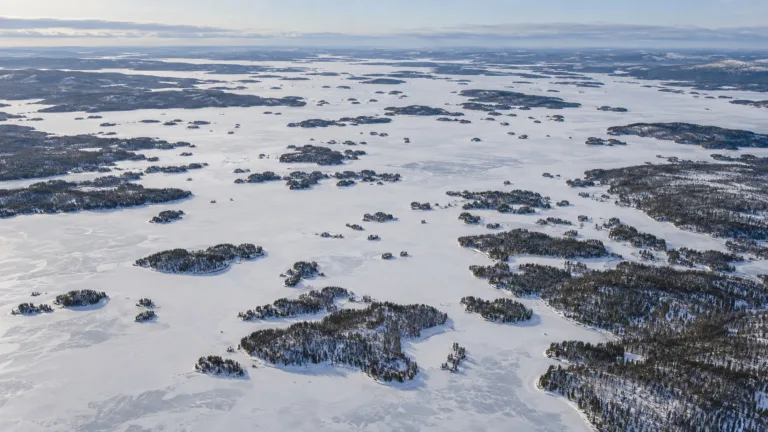
Lake Inari Freeze
Usually Fully Freezes
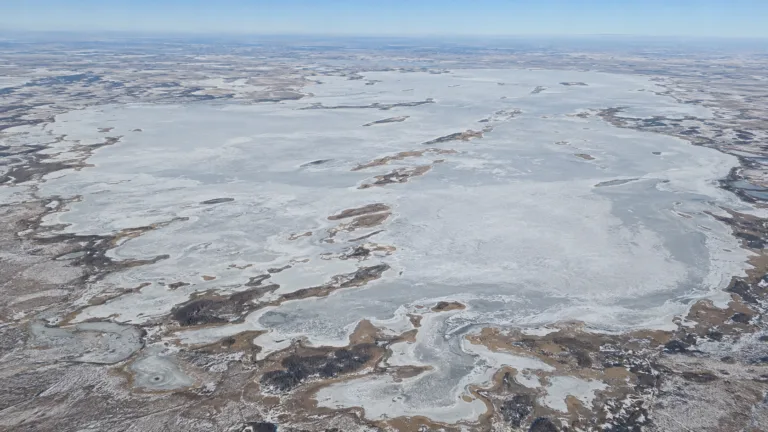
Lake Chany Freeze
Usually Fully Freezes

Lake Onega Freeze
Usually Fully Freezes

Lake Ladoga Freeze
Usually Fully Freezes