LakeFreeze Editorial Team

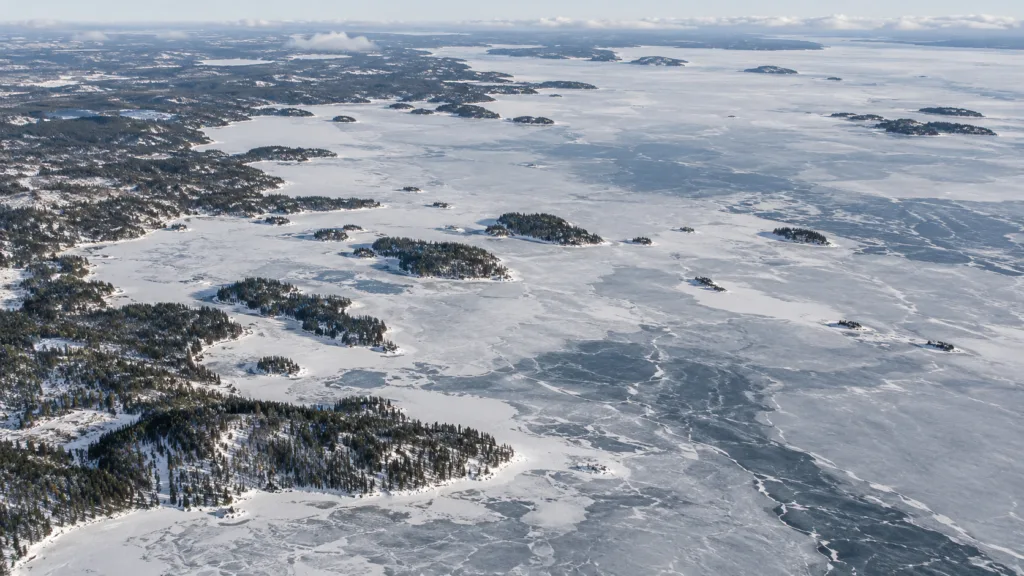
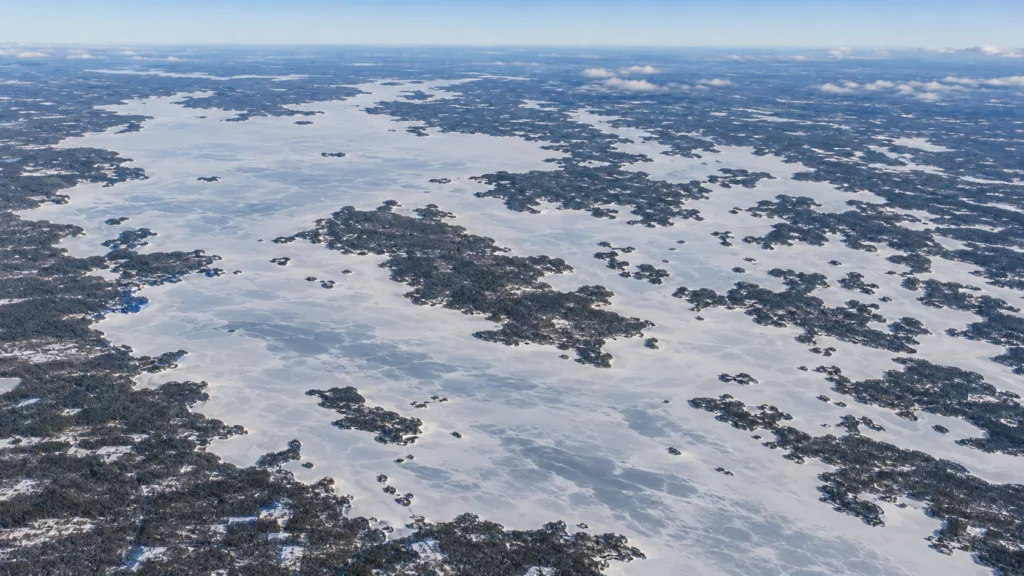
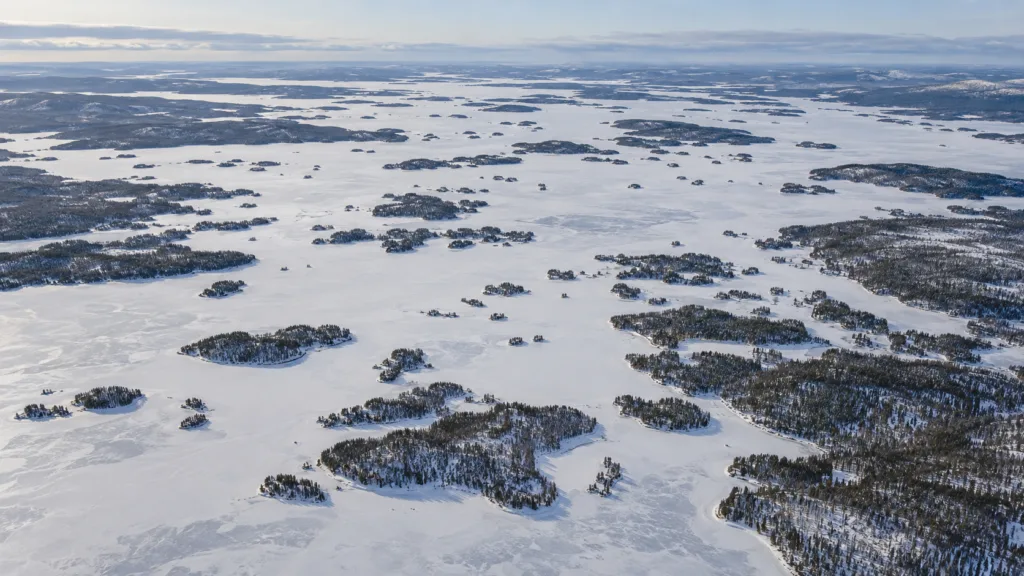
Lake Pielinen's broad winter ice stretches among forested islands and shores.

Lake Pielinen Freeze

Lake Pielinen regularly develops persistent seasonal ice, but its long phenology record needs a precise reading. The Finnish “ice-on” series records final freeze-up within the observer’s visible sector; on a lake of roughly 894 km², that is not the same as proving that every bay and open-water reach froze on one date. What Pielinen’s ice-on
Lake Pielinen Freeze Read More »

Lake Oulujärvi freezes over in winter, with ice and snow spreading among its islands and shorelines.

Lake Oulujärvi Freeze

Lake Oulujärvi normally develops extensive seasonal ice, but its long-running freeze record should not be interpreted as a single moment when all 928 km² of the lake become ice-covered. The Finnish observation series follows a defined visible area, an important distinction on a lake divided into broad open basins, islands, bays and narrower passages. What

Lake Oulujärvi Freeze Read More »

Lake Inari’s icy expanse, dotted with rocky islands, captures the lake during its winter freeze.

Lake Inari Freeze

Lake Inari develops extensive seasonal ice cover, but its freeze-up is spatially staggered. Sheltered, shallow bays can lock up weeks before the major open-water basins, and the spring sequence is similarly uneven. Long-term observations also show that breakup has been moving earlier even though autumn freeze dates remain highly variable. Why Nellim can freeze well

Lake Inari Freeze Read More »

Lake Onega usually begins to freeze in late November, forming broad sheets of ice across the water.

Lake Onega Freeze

Lake Onega normally develops a complete seasonal ice cover, but the important distinction is between the first ice in sheltered water and freeze-over of the lake as a whole. Its large volume carries autumn heat well into the cold season, so freeze-up is prolonged; once spring breakup starts, the loss of ice is comparatively faster.

Lake Onega Freeze Read More »

Lake Ladoga freezes along its rocky shore, with sheets of ice covering much of the water.

Lake Ladoga Freeze

Lake Ladoga develops ice every winter, but a complete lid is not guaranteed. The shallow south normally freezes first, while deep central and northern water can remain open well into winter. In milder seasons, floating ice and open-water areas may persist instead of consolidating into stable lake-wide cover. Why Petrokrepost Bay freezes before the deep

Lake Ladoga Freeze Read More »

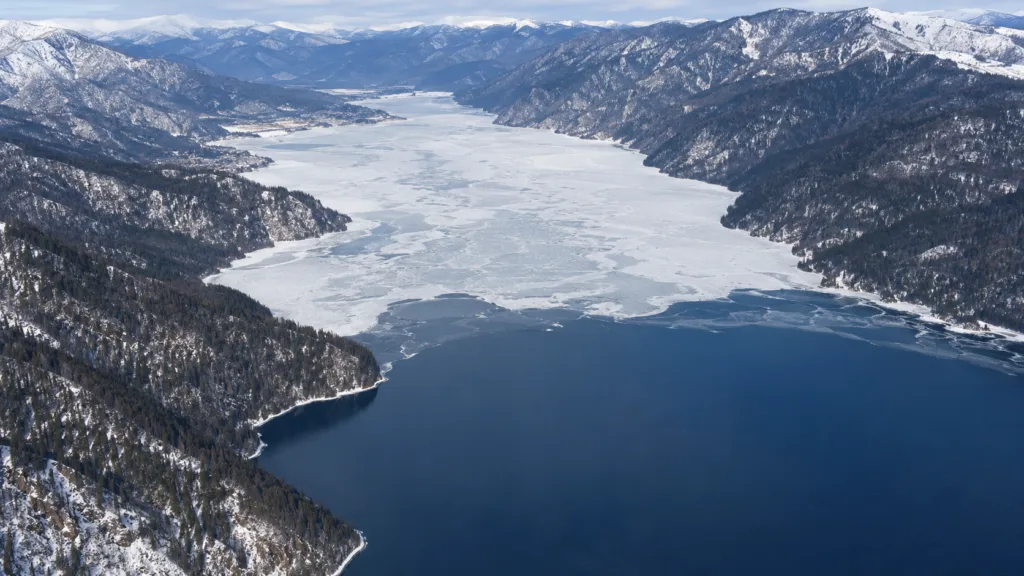
Lake Baikal freeze showing the icy surface covering the lake as winter temperatures cause the water to solidify.

Lake Baikal Freeze

Lake Baikal develops a continuous winter ice cover across nearly all of its main surface each year, but it does not freeze as one synchronized sheet. Northern areas generally close first, the southern basin follows, and spring opening proceeds in the opposite direction. The Angara River outflow is the main local exception, remaining open while

Lake Baikal Freeze Read More »

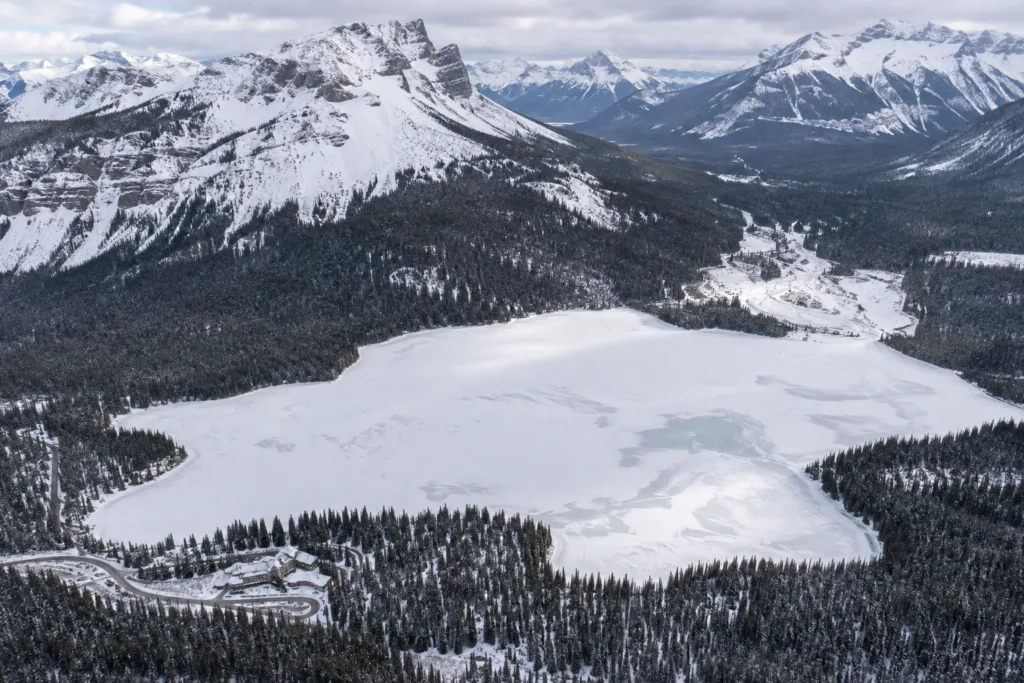
Emerald Lake freeze shows the beginning of winter when temperatures drop and the lake surface turns solid over the snowy landscape.

Emerald Lake Freeze

Emerald Lake in Yoho National Park develops broad seasonal ice cover and reaches a fully frozen state during winter. The strongest evidence is unusually direct: Parks Canada maintains an alternative winter route that crosses the lake after the surface has frozen, while the lodge operator reports that the lake is typically fully frozen by just

Emerald Lake Freeze Read More »

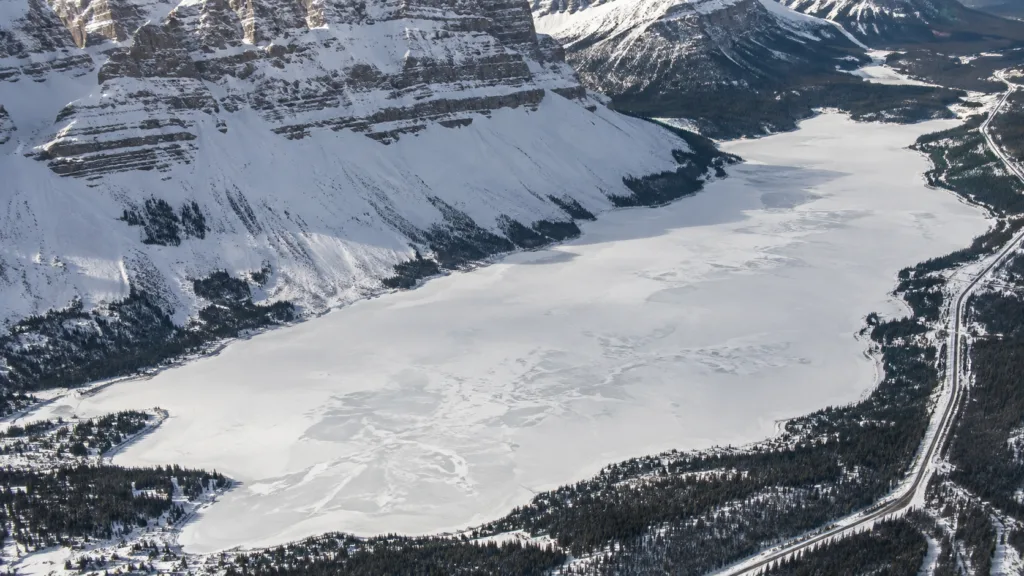
Bow Lake begins to freeze as winter temperatures drop, transforming the lake's surface into a solid ice sheet.

Bow Lake Freeze

Bow Lake develops broad, persistent winter ice cover and normally freezes across its surface during the cold season. Its position near the Continental Divide, at roughly 1,920 metres above sea level, gives it a much colder seasonal setting than lower-elevation lakes farther down the Bow River system. The exact dates when continuous ice first forms

Bow Lake Freeze Read More »