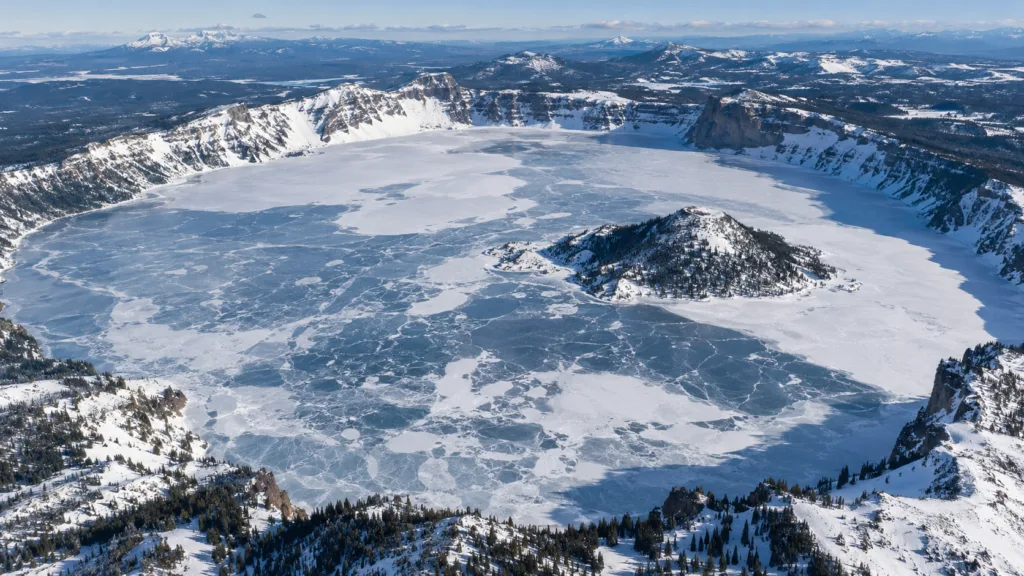
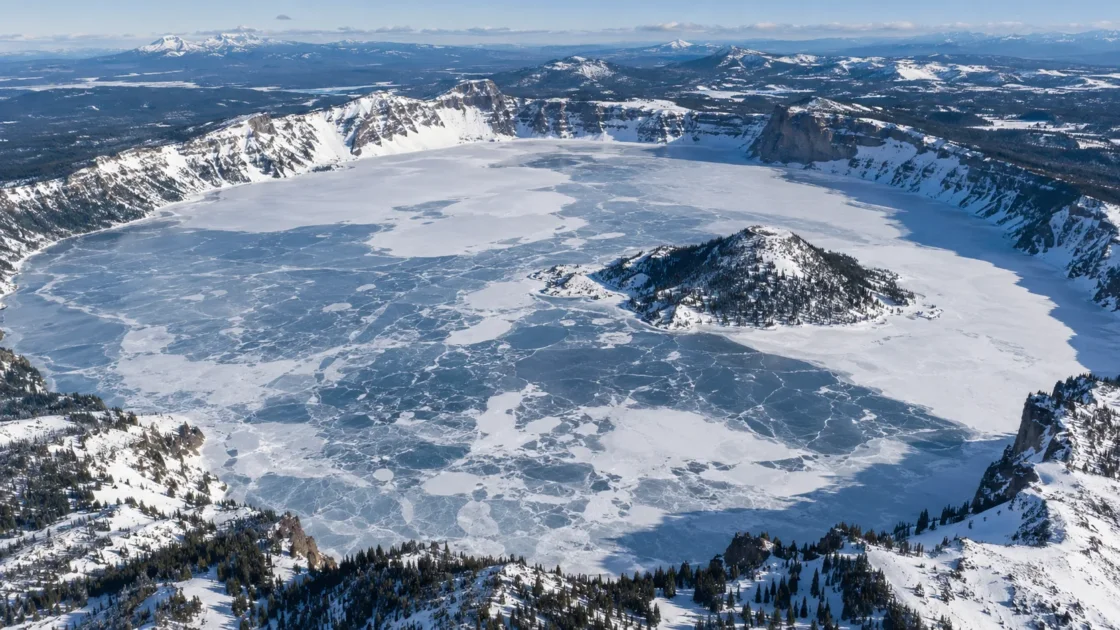
Mostly open water in winter; brief skim ice can occur, while complete freeze-over is exceptional.
Official Park Record and Peer ReviewedNational Park Service — Crater Lake Frequently Asked QuestionsNational Park Service — Crater Lake Webcam Photo GalleryU.S. Geological Survey — Thermal, Chemical, and Optical Properties of Crater Lake, OregonEvidence: HighCrater Lake's deep, high-volume water column stores summer heat, while winter wind and convective mixing repeatedly move heat through the upper water column and hinder persistent lake-wide ice.
Where Is Crater Lake?
Oregon · United States
Crater Lake on the Globe
Rotate the world or focus directly on the lake.
Measured Ice and Freeze Data
Evidence Behind the Freeze Profile
The National Park Service describes winter freezing as very rare and states that Crater Lake has not frozen over completely since 1949.
Official Park RecordNational Park Service — Crater Lake Frequently Asked QuestionsEvidence: HighPark webcam records describe thin skim ice forming on calm winter and spring nights and usually disappearing after wind or rising sunlight returns.
Official ObservationNational Park Service — Crater Lake Webcam Photo GalleryEvidence: HighPublished Crater Lake research links its winter ice resistance to the lake's large volume and heat content and documents wind- and convection-driven mixing to roughly 200–250 meters during winter and spring.
Peer ReviewedU.S. Geological Survey — Thermal, Chemical, and Optical Properties of Crater Lake, OregonEvidence: HighAn NPS physical-characteristics record notes that the lake was mostly covered with ice twice in 1985, once in January and again in December, while the current park record still identifies 1949 as the last complete freeze-over.
Official Park RecordNational Park Service — Crater Lake Frequently Asked QuestionsNational Park Service — An Introduction to Crater LakeEvidence: HighSources
Crater Lake normally remains largely open through winter even while deep snow accumulates around the caldera. A complete lake-wide freeze requires conditions far beyond an ordinary snowy winter: the National Park Service reports that the lake has not frozen over completely since 1949. Short-lived skim ice is a different phenomenon and can appear on calm cold nights without developing into persistent seasonal cover.
Why a snowy caldera can still hold open water
Air temperature alone does not determine whether Crater Lake freezes. The lake covers about 53 square kilometers yet reaches a maximum depth of 594 meters, giving it a very large water volume relative to the surface exposed to cold air. That water acts as a heat reservoir. Energy absorbed during the warmer part of the year is stored through a deep water column and cannot be removed as quickly as heat from a shallow lake.
This helps explain an apparent contradiction at Crater Lake: the surrounding landscape can remain deeply snow-covered while the lake surface stays dark and open. The National Park Service identifies the lake’s large stored heat, windy surface conditions and relatively mild winter air temperatures as reasons complete freezing is uncommon.
Winter mixing works against a stable ice sheet
Crater Lake does not simply cool from the surface downward and remain still. Published limnological work describes winter and spring mixing to roughly 200–250 meters, driven by wind energy and convection. Cooling surface water becomes denser and sinks, while water from below is redistributed through the upper lake.
That circulation matters for ice formation. A calm, cold night may cool the immediate surface enough for a thin skin of ice to develop, but the National Park Service notes that such skim ice usually does not last long. Wind can break it apart, and daytime solar heating can remove it. Persistent lake-wide ice therefore requires more than a brief cold spell; the surface must remain cold enough, and calm enough, for ice formation to outrun the heat supplied by the water beneath it.
The 1949 freeze was outside the normal winter pattern
The best-known complete freeze is the winter of 1949. An NPS physical-characteristics record places that freezing event between January and April, and the park’s current information still identifies 1949 as the last time Crater Lake froze over completely.
Later winters show why the wording matters. In 1985 the lake was recorded as mostly covered with ice twice, in January and again in December. Those episodes did not replace 1949 in the park record as the most recent complete freeze-over. For Crater Lake, “mostly ice-covered,” temporary skim ice and a continuous lake-wide ice sheet describe different states and should not be treated as the same event.
Why Crater Lake has no useful routine freeze-up date
Many seasonally frozen lakes can be described with a recurring freeze-up period followed months later by breakup or ice-off. Crater Lake does not fit that model well. In most winters there is no persistent lake-wide ice season from which a normal freeze-up date or ice duration can be defined.
The more accurate winter pattern is open water interrupted by occasional short-lived surface ice, with rare winters producing much broader coverage. Complete freeze-over belongs to the historical extreme rather than the annual cycle.
Similar Lakes by Freeze Pattern
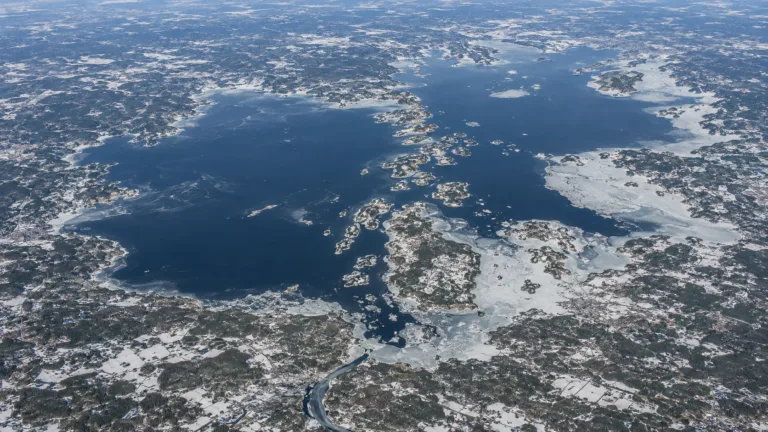
Lake Vänern Freeze
Usually Partially Freezes
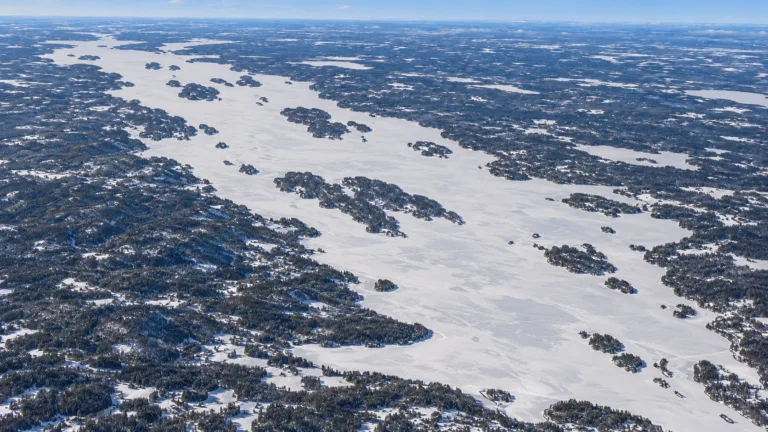
Lake Pielinen Freeze
Usually Fully Freezes
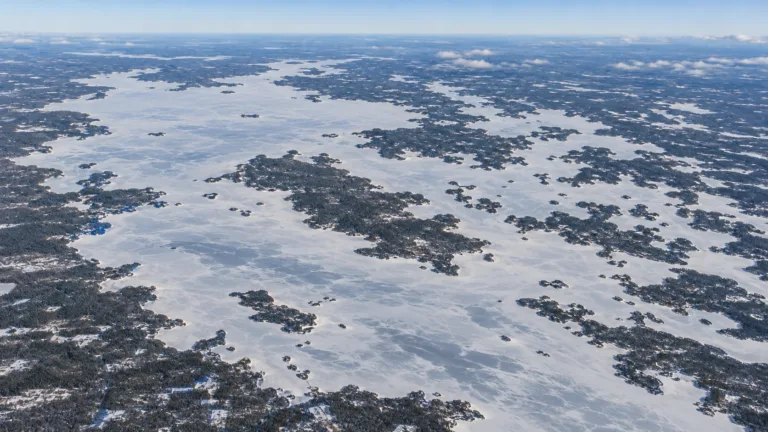
Lake Oulujärvi Freeze
Usually Fully Freezes
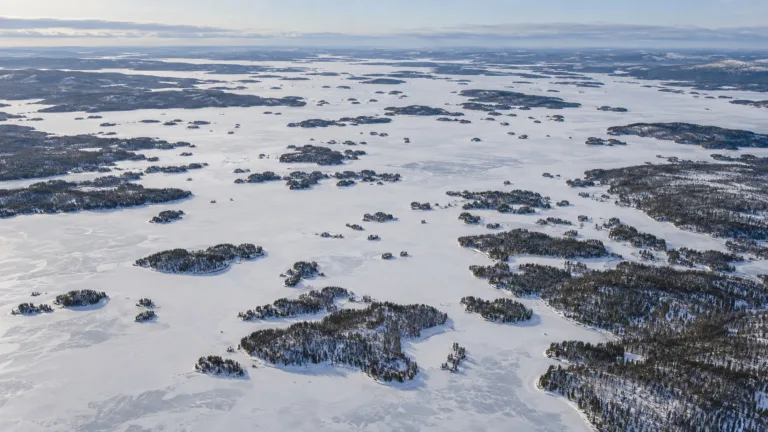
Lake Inari Freeze
Usually Fully Freezes
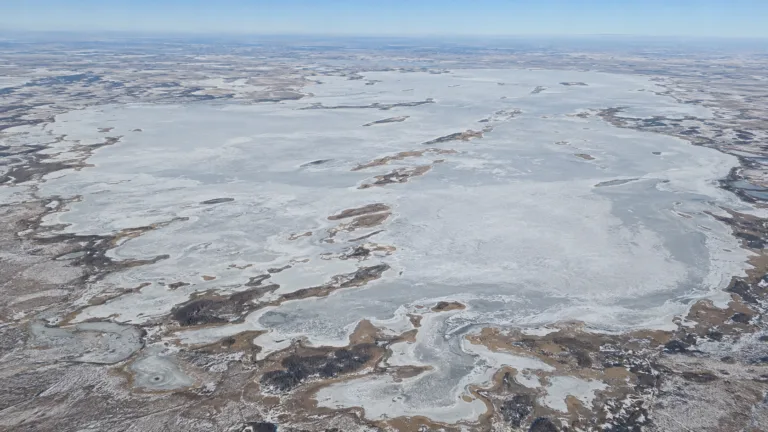
Lake Chany Freeze
Usually Fully Freezes

Lake Teletskoye Freeze
Variable Full/Partial Freeze