
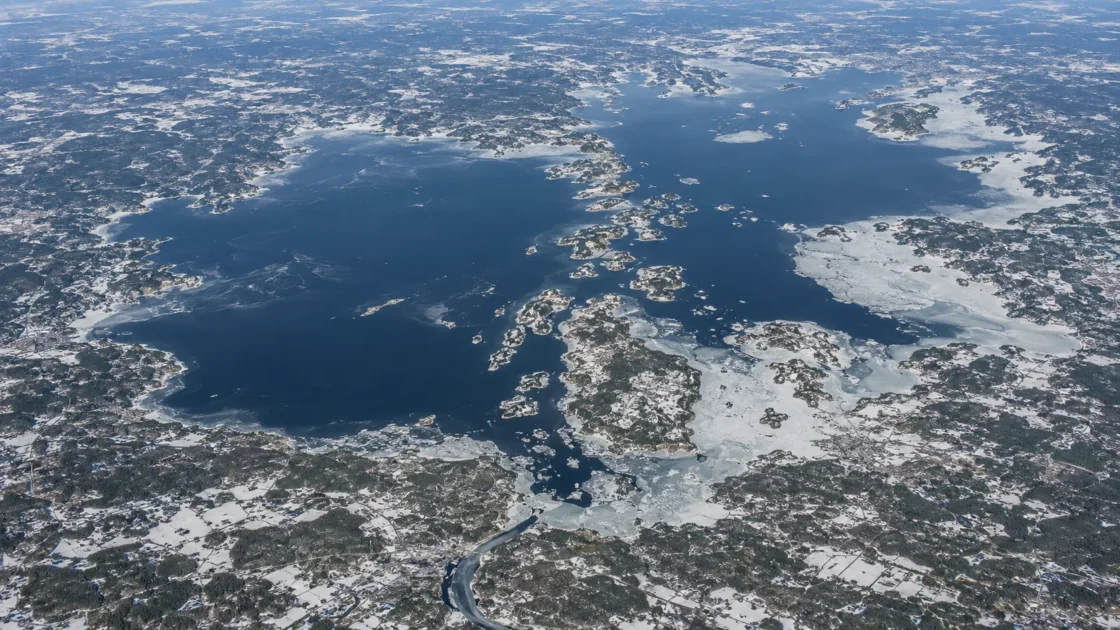
Winter ice is highly variable; bays and nearshore waters freeze more often than the open basins.
Official monitoring and peer-reviewed lake-ice researchSMHI — Ice on LakesSwedish University of Agricultural Sciences — Ice-Free Winters in Sweden's Largest LakesHydrology and Earth System Sciences — Long-Term Lake RecordsSMHI — Ice Winter 2012–2013Swedish Maritime Administration and SMHI — Ice Winter 1995/96Federal Maritime and Hydrographic Agency — Ice Report, 24 February 2026SMHI — Lake Ice Change Over TimeJournal of Hydrology: Regional Studies — Lake Vänern Surface Temperature DatasetEvidence: HighVänern cools slowly because of its size and stored heat, while wind keeps the upper water moving and can break, drift, and compact newly formed ice.
Where Is Vänern?
Southwestern Sweden · Sweden
Vänern on the Globe
Rotate the world or focus directly on the lake.
Measured Ice and Freeze Data
Evidence Behind the Freeze Profile
Official seasonal records show complete ice cover in February 1996 and again in early March 2013, rather than an annual full-freeze pattern.
Official Seasonal AnalysisSMHI — Ice Winter 2012–2013Swedish Maritime Administration and SMHI — Ice Winter 1995/96Evidence: HighHistorical bay records show long local ice periods, while a 24 February 2026 ice report still described open water in central Värmlandssjön during a winter with broad ice elsewhere on Vänern.
Official MonitoringFederal Maritime and Hydrographic Agency — Ice Report, 24 February 2026Lake Vänern Water Conservation Association — Shore Vegetation and Ice, Report 67Evidence: HighPeer-reviewed work reports earlier breakup and more frequent ice-free winters since 1979; SMHI also projects fewer ice days for Vänern later in the century.
Peer Reviewed and Government Climate AnalysisSwedish University of Agricultural Sciences — Ice-Free Winters in Sweden's Largest LakesSMHI — Lake Ice Change Over TimeEvidence: HighSMHI describes Vänern as a very large, wind-exposed lake where ice formation resembles sea-ice formation: crystals and floes move, join, break apart, and compact under changing winds.
Government Lake ScienceSMHI — Ice on LakesEvidence: HighSources
- SMHI — Ice on Lakes
- Swedish University of Agricultural Sciences — Ice-Free Winters in Sweden's Largest Lakes
- Hydrology and Earth System Sciences — Long-Term Lake Records
- SMHI — Ice Winter 2012–2013
- Swedish Maritime Administration and SMHI — Ice Winter 1995/96
- Federal Maritime and Hydrographic Agency — Ice Report, 24 February 2026
- Lake Vänern Water Conservation Association — Shore Vegetation and Ice, Report 67
- Getty Thesaurus of Geographic Names — Vänern
- SMHI — Lake Ice Change Over Time
- Journal of Hydrology: Regional Studies — Lake Vänern Surface Temperature Dataset
Lake Vänern can freeze extensively, but a dependable winter-long sheet across the entire lake is not its normal state. Sheltered bays and nearshore waters can lock up while the large open basins remain partly open, and some winters pass with much less ice than others.
Why the open basins are harder to freeze
Vänern behaves differently from a small sheltered lake because it has a very large surface, substantial stored heat, long wind exposure and broad areas where the upper water stays in motion. SMHI notes that on very large lakes such as Vänern, ice can form in a sea-like way: crystals develop in the moving surface layer, gather into floes and freeze together. Strong wind can then break the cover, open leads or push ice into compact fields.
This makes the phrase “the lake has frozen” too imprecise on its own. Ice in a protected bay may be continuous while the central water is still open. The two main open-water areas, Dalbosjön and Värmlandssjön, can also progress at different rates during the same cold spell.
A full freeze still occurs in the right winter
Complete ice cover is not merely historical folklore. During the severe 1995/96 season, the Swedish Maritime Administration and SMHI reported that all of Vänern had frozen by 8 February 1996. In 2013, SMHI recorded a stepwise expansion: by 28 February all of Dalbosjön and most of Värmlandssjön were ice-covered, and the whole lake became covered in early March.
The cold winter of 2025/26 shows why lake-wide wording still needs care. On 24 February 2026, an official ice report described fast or very close ice up to 25 cm thick along the coasts and extensive ice away from shore, yet central Värmlandssjön still had open water. A winter can therefore look heavily frozen around much of the lake without meeting a strict whole-lake freeze description.
The bays can have a much longer ice season than the center
Historical records from Kinneviken and Mariestadssjön illustrate the local contrast. Their monitoring series produced long mean ice durations even though they represent bays rather than the entire 5,000-plus-square-kilometre lake. The same records also show a wide spread in freeze-up and breakup dates from year to year.
That distinction matters when interpreting old photographs, local reports or a single monitoring point. A frozen harbor, bay or nearshore station is evidence for that area. It is not, by itself, evidence that the open lake has frozen over.
The long-term record favors more open-water winters
A peer-reviewed study of Vänern and Vättern reported that ice breakup had moved earlier and ice-free winters had become more frequent from 1979 onward. A later peer-reviewed analysis summarized the 1979–2002 Vänern record as containing only nine winters classified as ice-covered.
SMHI’s broader lake-ice analysis points in the same direction for southern Sweden and projects that Vänern will be ice-free in most years toward the end of the century, with far fewer ice days in winters that still produce ice. That projection does not mean extensive ice can no longer occur now: the 2025/26 season is a recent example of how a cold winter can still produce broad, thick ice across large parts of the lake.
What an ice report on Vänern actually describes
Operational ice charts are snapshots of a moving surface. Wind direction can shift floes, compact ice against one shore and reopen water elsewhere. For Vänern, the most useful reading is therefore spatial: whether the report refers to a bay, the coast, Dalbosjön, Värmlandssjön or the lake as a whole.
Ice thickness and ice extent are separate measurements as well. A report of thick fast ice near the coast does not establish the percentage of the whole lake that is covered, and a broad area of ice does not imply uniform thickness across it.
Similar Lakes by Freeze Pattern
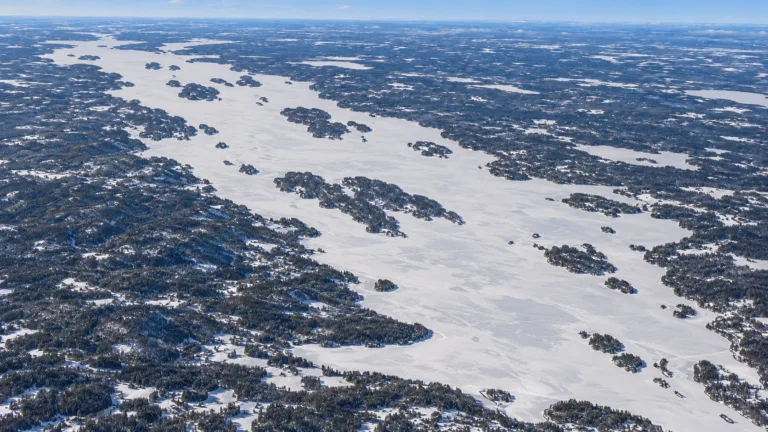
Lake Pielinen Freeze
Usually Fully Freezes
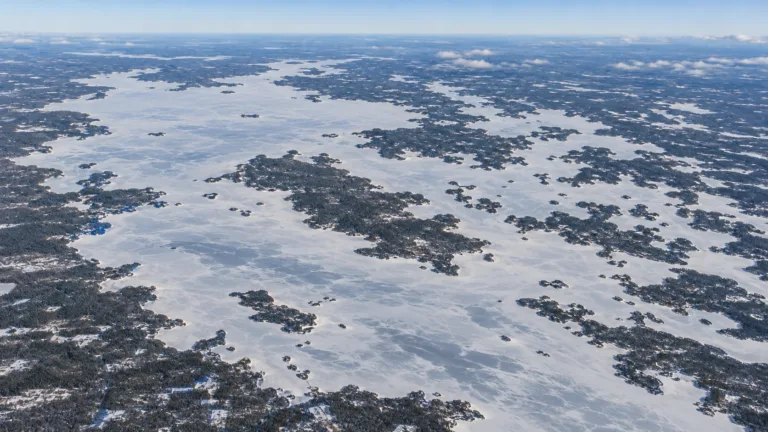
Lake Oulujärvi Freeze
Usually Fully Freezes
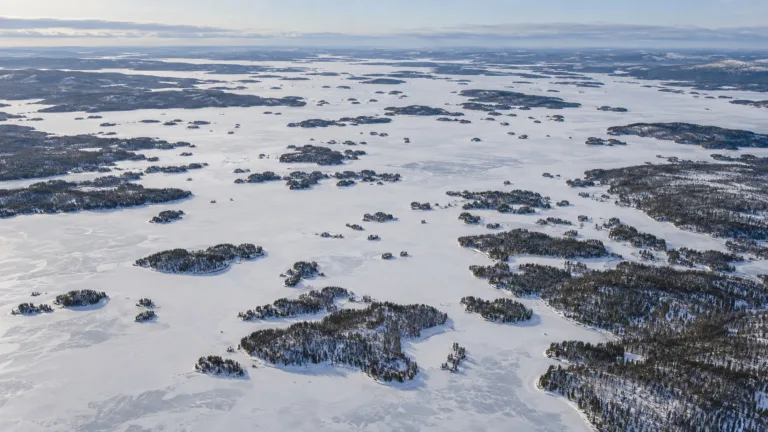
Lake Inari Freeze
Usually Fully Freezes
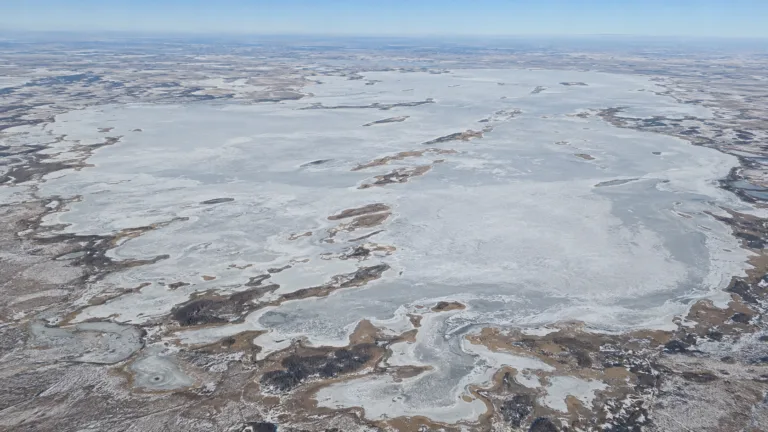
Lake Chany Freeze
Usually Fully Freezes

Lake Teletskoye Freeze
Variable Full/Partial Freeze

Lake Onega Freeze
Usually Fully Freezes