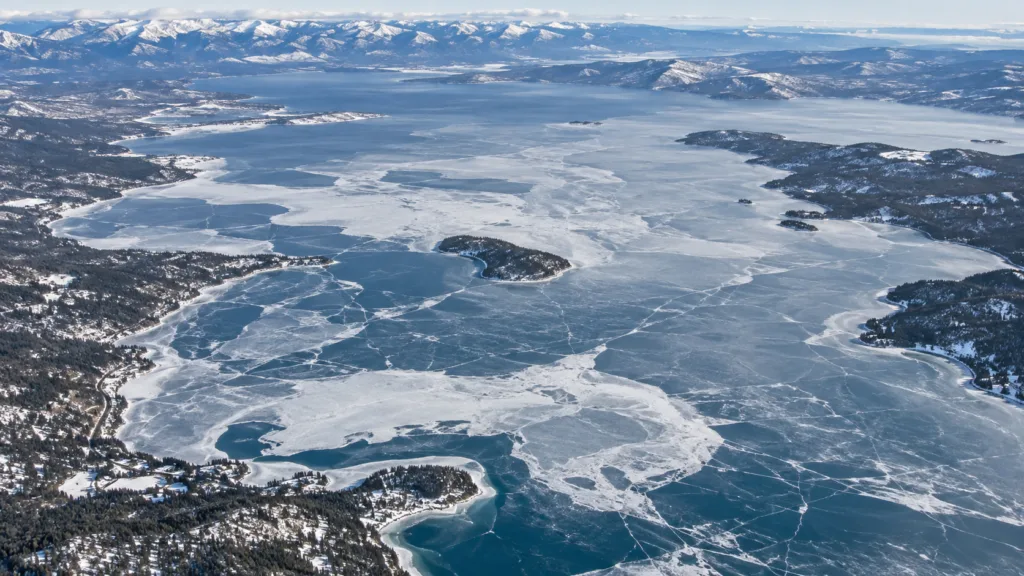
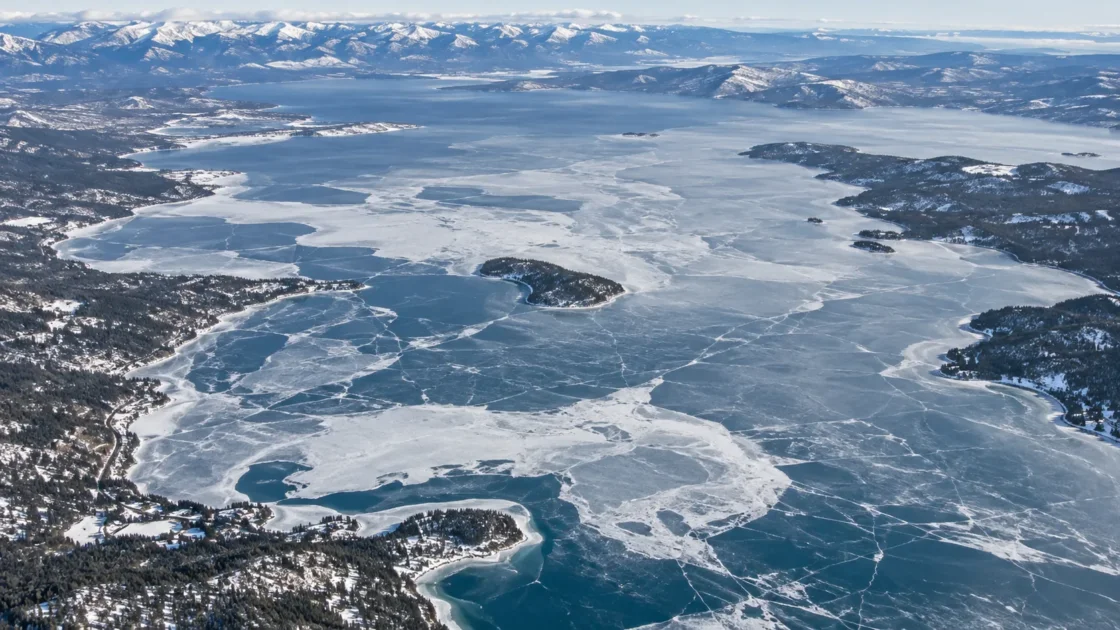
Usually open lake-wide, with seasonal bay and shoreline ice
University Lake Monitoring and Scientific LiteratureFlathead Lake Facts — Flathead Lake Biological Station, University of MontanaDiagnostic Analysis of Annual Phosphorus Loading and Pelagic Primary Production in Flathead Lake, MontanaMixing-driven changes in distributions and abundances of planktonic microorganisms in a large, oligotrophic lakeLimnological Studies of Flathead Lake Montana: A Status ReportEvidence: HighLarge volume and depth delay cooling; wind, currents and winter mixing often prevent stable ice from spreading across the main basin.
Where Is Flathead Lake?
Montana · United States
Flathead Lake on the Globe
Rotate the world or focus directly on the lake.
Measured Ice and Freeze Data
Evidence Behind the Freeze Profile
FLBS says the whole lake historically froze only about once per decade and has not completely frozen since the winters of 1988–89 and 1989–90.
Historical Monitoring RecordFlathead Lake Facts — Flathead Lake Biological Station, University of MontanaEvidence: HighScientific work describes a large heat budget, circulation, currents and winter mixing that help keep the open lake from developing stable continuous ice.
Scientific LiteratureDiagnostic Analysis of Annual Phosphorus Loading and Pelagic Primary Production in Flathead Lake, MontanaMixing-driven changes in distributions and abundances of planktonic microorganisms in a large, oligotrophic lakeEvidence: HighA scientific status report recorded bay ice beginning in late December 1968, lake-proper freezing during January, and complete cover from the last week of January until breakup began in the first week of April.
Historical Scientific ObservationLimnological Studies of Flathead Lake Montana: A Status ReportEvidence: HighAn FLBS scientist estimated roughly 95% ice cover in early March 2019 while open channels remained; wind then began breaking the ice apart.
Expert ObservationFlathead Lake nearly achieves complete ice-over — Daily Inter LakeEvidence: ModerateSources
- Flathead Lake Facts — Flathead Lake Biological Station, University of Montana
- Diagnostic Analysis of Annual Phosphorus Loading and Pelagic Primary Production in Flathead Lake, Montana
- Mixing-driven changes in distributions and abundances of planktonic microorganisms in a large, oligotrophic lake
- Flathead Lake nearly achieves complete ice-over — Daily Inter Lake
- Limnological Studies of Flathead Lake Montana: A Status Report
- FISHMT Waterbody Details: Flathead Lake — Montana Fish, Wildlife & Parks
Flathead Lake usually remains open across its main basin through winter. Ice forms more readily in bays and along sheltered shoreline, while a lake-wide freeze requires an unusually long spell of deep cold with little wind. Complete ice cover belongs to exceptional winters rather than the lake’s normal seasonal cycle.
A deep, moving lake resists a continuous ice sheet
Flathead Lake holds about 5.56 cubic miles of water and has a mean depth of about 164.7 feet. That large water mass releases stored heat slowly as winter develops. Earlier limnological work described the lake as having a large heat budget and strong circulation, both of which make full freeze-over difficult.
Wind adds another barrier. A calm surface can begin to seal during severe cold, but wind and wave action can disrupt young ice before it spreads across the open basin. Currents and vertical mixing also keep moving heat through the water column. Peer-reviewed observations from a recent two-year study found the lake fully mixed in winter and reported no ice at the open-water sampling site; that observation applies to the monitored site, not automatically to every bay or shoreline sector.
Bays can freeze while the main basin remains open
Sheltered, shallower water can lose heat faster and experiences less wave energy than the broad central lake. This creates the familiar Flathead pattern in which shoreline areas and bays carry winter ice even when a large open-water area remains farther offshore.
A historical limnological record from the winter of 1968–69 explicitly described bay freezing in late December as a normal occurrence. That distinction matters when interpreting winter photographs or local observations: ice in a bay records local conditions, while a complete freeze requires continuous lake-wide cover.
The 1968–69 winter crossed the full-freeze threshold
The winter of 1968–69 shows how severe the weather must become before Flathead Lake seals over. After autumn mixing, inverse stratification began in late December. Air temperatures reached as low as −37°C during December and January. Bay ice appeared first, the lake proper began freezing during January, and complete ice cover persisted from the last week of January until breakup started in the first week of April.
The same scientific record states that this was Flathead Lake’s first complete icing in 23 years. It is therefore an extreme historical season, not a template for assigning normal freeze-up or ice-off dates to the lake.
2019 reached near-total ice cover without a clear full freeze
Early March 2019 produced one of the closest modern approaches to a lake-wide freeze. A Flathead Lake Biological Station researcher estimated that roughly 95% of the lake was frozen, with only a couple of open channels visible after a period of sub-zero cold and relatively little wind. When wind returned, the ice began to break apart.
Later retellings sometimes describe 2019 as a complete freeze, but the Biological Station’s current lake record says Flathead has not completely frozen since the winters of 1988–89 and 1989–90. The better-supported description of 2019 is a near-complete ice event rather than a confirmed whole-lake freeze.
The historical record does not define a modern recurrence interval
FLBS observations indicate that complete freezing once occurred roughly once per decade, yet the modern record contains a much longer gap. That gap is a documented change in occurrence, but by itself it is not a quantified trend in freeze-up date, ice duration or breakup timing. A formal trend would require a consistent multi-decadal ice record analyzed with the same event definitions across years.
Similar Lakes by Freeze Pattern
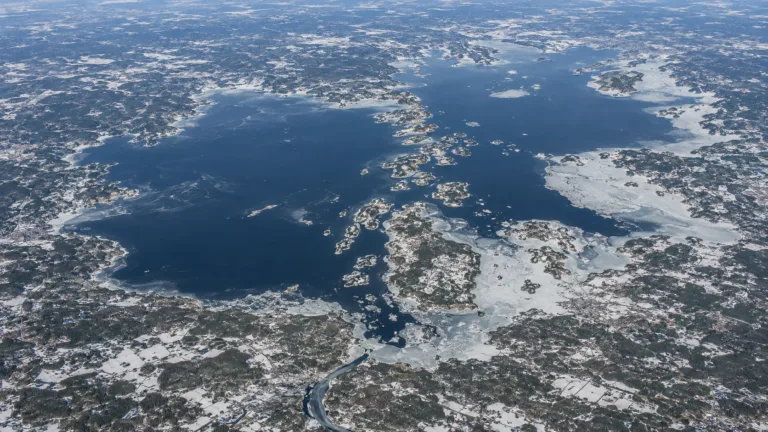
Lake Vänern Freeze
Usually Partially Freezes
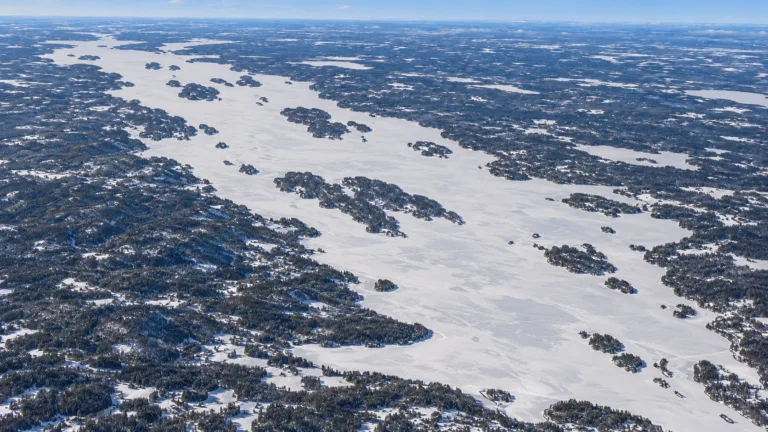
Lake Pielinen Freeze
Usually Fully Freezes
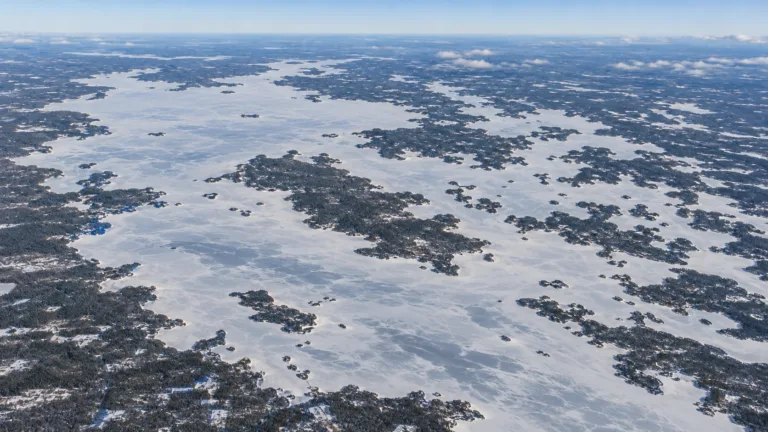
Lake Oulujärvi Freeze
Usually Fully Freezes
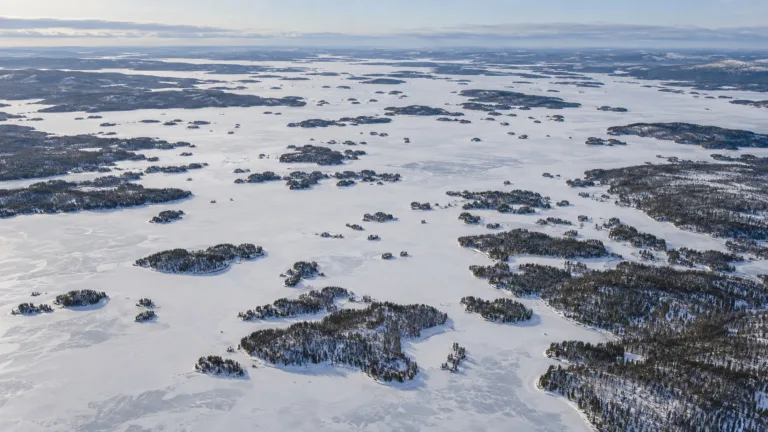
Lake Inari Freeze
Usually Fully Freezes
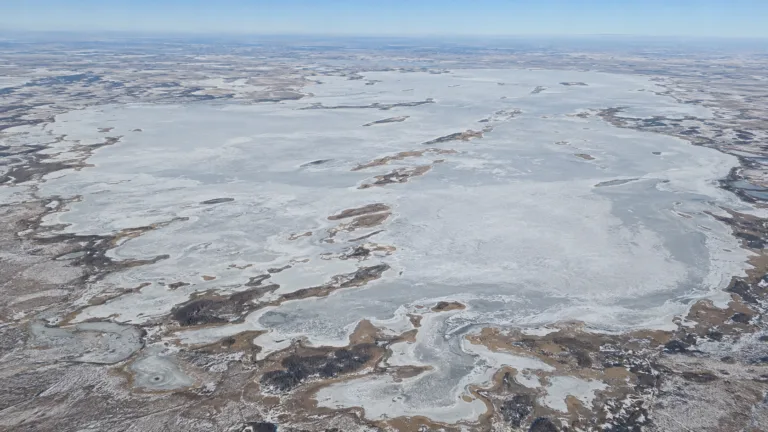
Lake Chany Freeze
Usually Fully Freezes

Lake Teletskoye Freeze
Variable Full/Partial Freeze