
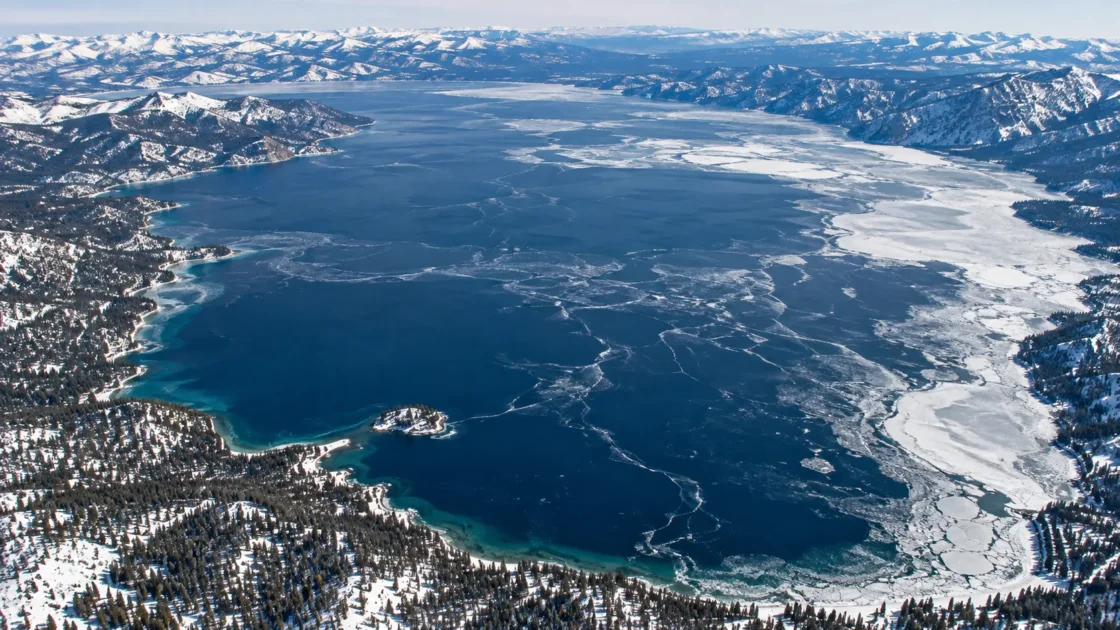
Main basin stays open; localized ice can form in sheltered shallow water
Official and Scientific MonitoringUSGS EROS Cal/Val Center of Excellence — Lake TahoeUC Davis Tahoe Environmental Research Center — Tahoe: State of the Lake Report 2023NASA Jet Propulsion Laboratory — Lake Tahoe Site DescriptionUC Davis Tahoe Environmental Research Center — Science & Research at Lake TahoeRoberts et al. (2018) — Water Resources ResearchEvidence: HighLake Tahoe's great depth and thermal mass preserve stored heat while winter cooling and mixing deepen the surface layer, keeping the main basin above the conditions needed for lake-wide ice cover.
Where Is Lake Tahoe?
California / Nevada · United States
Lake Tahoe on the Globe
Rotate the world or focus directly on the lake.
Measured Ice and Freeze Data
Evidence Behind the Freeze Profile
USGS and NASA/JPL describe the deep main lake as remaining unfrozen in winter; UC Davis TERC reports no data showing complete lake ice cover since the documented record beginning in 1844.
Official Monitoring and Scientific SynthesisUSGS EROS Cal/Val Center of Excellence — Lake TahoeUC Davis Tahoe Environmental Research Center — Tahoe: State of the Lake Report 2023NASA Jet Propulsion Laboratory — Lake Tahoe Site DescriptionEvidence: HighDuring the cold 2022–23 winter, ice formed at marinas and along parts of the shoreline, while Emerald Bay developed full surface ice in March 2023.
Scientific ObservationUC Davis Tahoe Environmental Research Center — Tahoe: State of the Lake Report 2023UC Davis Tahoe Environmental Research Center — Science & Research at Lake TahoeEvidence: HighLake Tahoe is exceptionally deep, and winter cooling is coupled to mixing of a large water volume. That thermal inertia keeps the main basin from reaching freeze-over conditions during normal winters.
Peer Reviewed and Official ScienceUSGS EROS Cal/Val Center of Excellence — Lake TahoeNASA Jet Propulsion Laboratory — Lake Tahoe Site DescriptionRoberts et al. (2018) — Water Resources ResearchEvidence: HighSources
- USGS EROS Cal/Val Center of Excellence — Lake Tahoe
- UC Davis Tahoe Environmental Research Center — Tahoe: State of the Lake Report 2023
- NASA Jet Propulsion Laboratory — Lake Tahoe Site Description
- UC Davis Tahoe Environmental Research Center — Science & Research at Lake Tahoe
- Roberts et al. (2018) — Water Resources Research
Lake Tahoe’s main basin does not develop seasonal whole-lake ice cover. Even during the cold 2022–23 winter, when Emerald Bay froze completely and ice appeared in marinas and shoreline pockets, the open lake itself remained unfrozen.
Why the main lake stays open through winter
Lake Tahoe has the geometry of a lake that stores a great deal of heat: it reaches about 501 meters (1,645 feet) at its deepest point and holds roughly 156 cubic kilometers of water. Cooling the exposed surface is therefore only part of the process. As autumn and winter cooling makes the upper water denser, that water can sink and mix with deeper water, so heat loss is spread through a large volume rather than being confined to a thin surface layer.
Fresh water reaches its maximum density near 4°C (39.2°F). Lake Tahoe’s winter surface temperature approaches that range, while the lake’s fall-to-winter surface layer deepens and late-winter mixing can extend hundreds of meters. The cold season does not remove enough stored heat for the main basin to progress from that mixed state to sustained lake-wide freezing. Wind and wave action can also disrupt thin ice in exposed water.
Emerald Bay can freeze while Lake Tahoe remains open
The southwestern bay behaves differently from the open lake. UC Davis records show that large areas of Emerald Bay began developing a thin ice crust by February 1, 2023. By March, the entire bay surface had frozen and snow accumulated on top. TERC described it as the first full-bay freeze in at least 40 years.
That event did not represent a Lake Tahoe freeze-over. During the same winter, the main lake remained open even though ice formed in many marinas and along parts of the shoreline. TERC also notes that thin ice sheets can form in shallow nearshore water during very cold, calm conditions. Local ice around Tahoe is therefore a different observation from whole-lake ice cover.
The historical record supports an ice-free main basin
UC Davis TERC reports no data showing that Lake Tahoe has been completely ice-covered since John Frémont’s recorded sighting of the lake in 1844. That wording matters: it describes the documented observational record rather than claiming that a whole-lake freeze has never occurred at any point in the lake’s much longer history.
The modern physical evidence points in the same direction. USGS and NASA/JPL describe Tahoe’s depth and thermal mass as the reason the lake does not freeze in winter, and peer-reviewed work on its heat and mixing regime reaches the same conclusion. Tahoe can be surrounded by deep snow and experience many subfreezing air-temperature days while still retaining enough heat in its water column to keep the main surface open.
There is no normal Lake Tahoe freeze-up or breakup date
Because the main basin does not form a recurring seasonal ice sheet, Lake Tahoe has no meaningful lake-wide freeze-up, peak-ice or ice-off calendar comparable with shallower cold-climate lakes. Dates from Emerald Bay, marinas or shoreline ice should not be converted into a freeze season for the entire lake. Those local events depend on short periods of cold, calm weather and on the much smaller volume of water involved.
Similar Lakes by Freeze Pattern

Lake Teletskoye Freeze
Variable Full/Partial Freeze
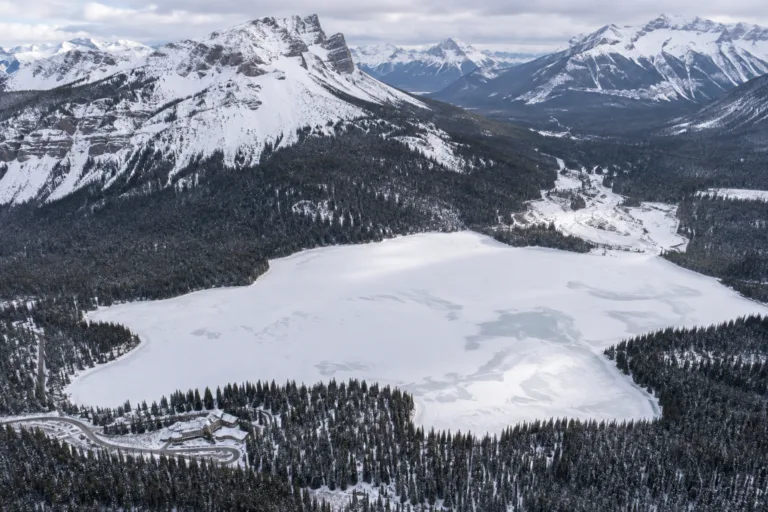
Emerald Lake Freeze
Usually Fully Freezes
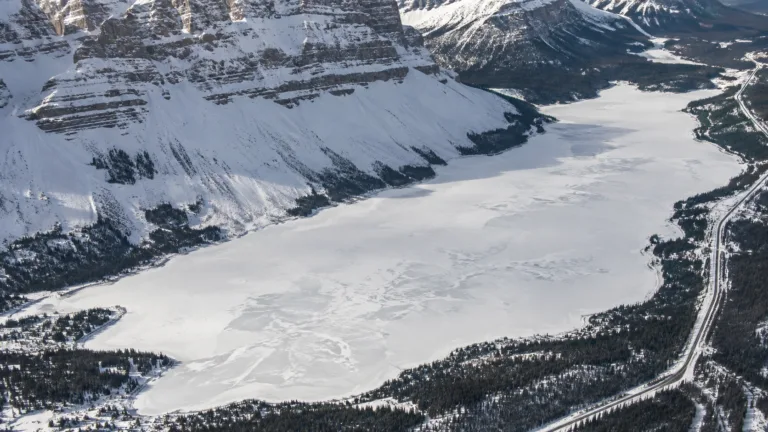
Bow Lake Freeze
Usually Fully Freezes
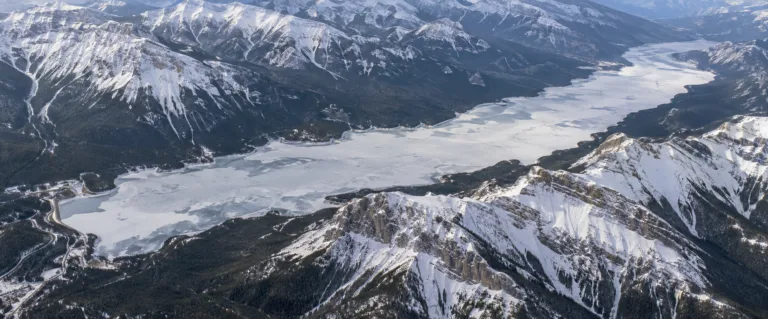
Lake Minnewanka Freeze
Usually Fully Freezes
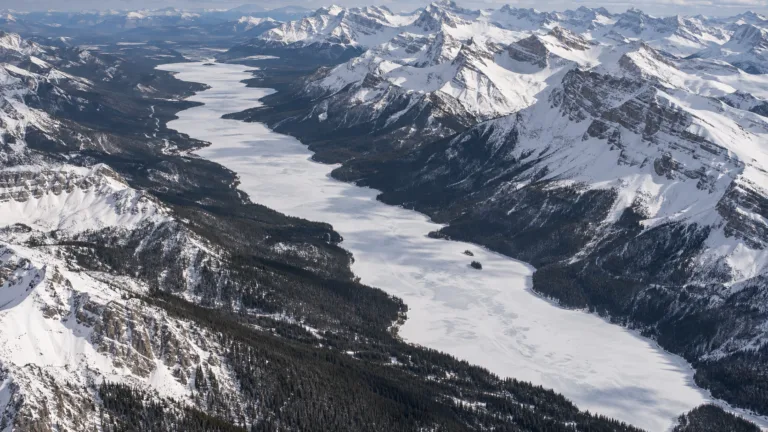
Maligne Lake Freeze
Usually Fully Freezes
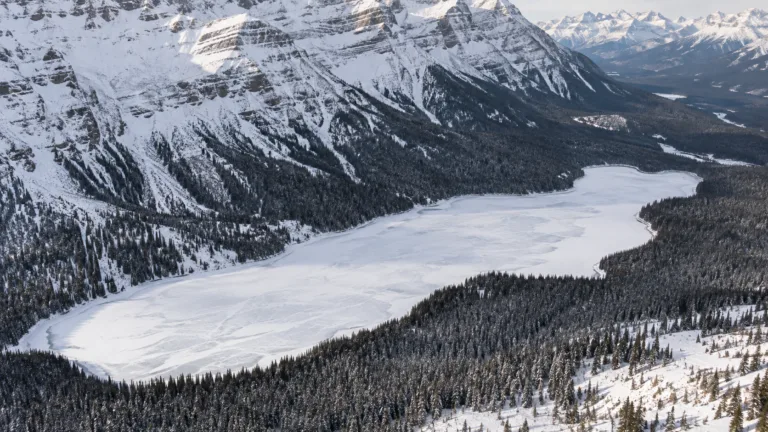
Peyto Lake Freeze
Usually Fully Freezes