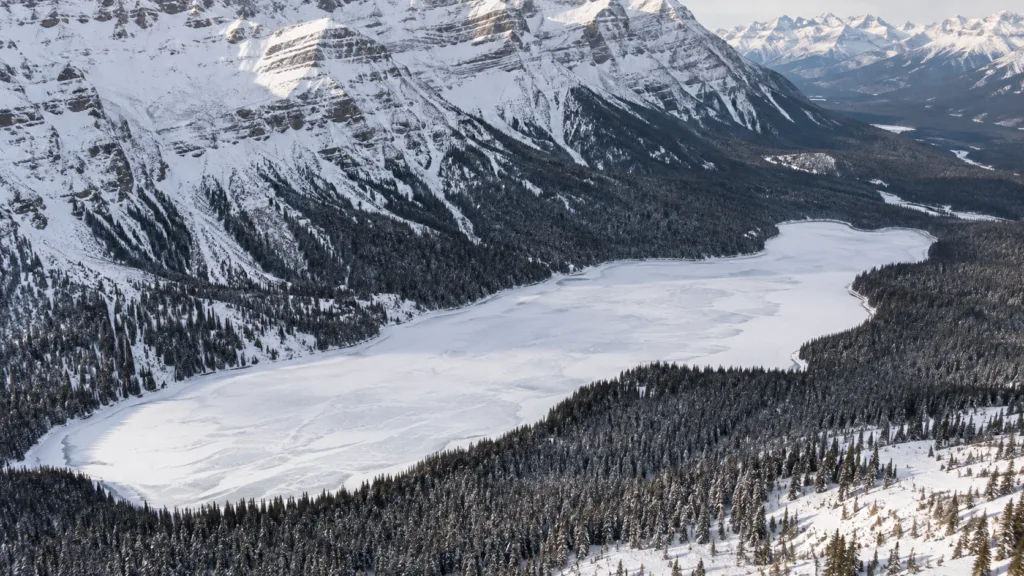
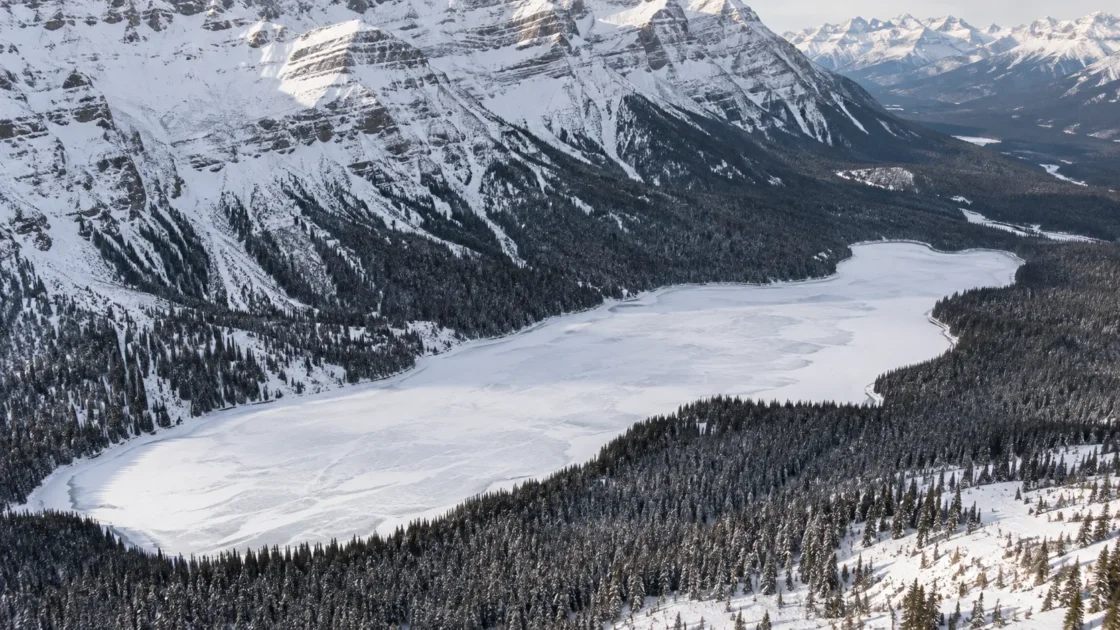
Seasonal complete ice cover with a snow-covered winter surface
Official Park Guidance + Seasonal ObservationsParks Canada — Winter Adventure Guide: Icefields ParkwayBanff & Lake Louise Tourism — The Best Dates to Visit Banff and Lake Louise in the SummerElite Jetsetter — The Local's Guide to Peyto Lake in BanffUniversity of Northern British Columbia — The Influence of Glacier Change on Sediment Yield, Peyto Basin, Alberta, CanadaEvidence: ModerateAt roughly 1,876 m elevation, prolonged cold supports complete winter ice cover; spring breakup is delayed until warming and snowmelt intensify in June.
Where Is Peyto Lake?
Alberta · Canada
Peyto Lake on the Globe
Rotate the world or focus directly on the lake.
Freeze and Ice Cover Through the Year
Month-level states are shown only when supported. Unclassified months remain explicitly marked.
Evidence Behind the Freeze Profile
Parks Canada describes Peyto Lake as frozen and snow-covered in winter, while repeated local seasonal observations show complete freeze-over occurring during November.
Official Park Guidance + Multi-Season ObservationParks Canada — Winter Adventure Guide: Icefields ParkwayElite Jetsetter — The Local's Guide to Peyto Lake in BanffEvidence: ModerateBanff & Lake Louise Tourism places Peyto Lake's thaw around mid-June; local seasonal records also show ice persisting into May and sometimes early June.
Regional Seasonal Guidance + Multi-Season ObservationBanff & Lake Louise Tourism — The Best Dates to Visit Banff and Lake Louise in the SummerElite Jetsetter — The Local's Guide to Peyto Lake in BanffEvidence: ModerateA UNBC watershed study reports Peyto Lake at about 1,876 m elevation, with a surface area of about 1.5 km² and two basins reaching roughly 43 m and 49 m maximum depth.
University ResearchUniversity of Northern British Columbia — The Influence of Glacier Change on Sediment Yield, Peyto Basin, Alberta, CanadaEvidence: HighWatershed research reports that about 82% of Peyto Creek runoff occurs from June through August, while peer-reviewed measurements document strong glacier-fed sediment delivery and lake circulation during the summer melt season.
University Research + Peer ReviewedUniversity of Northern British Columbia — The Influence of Glacier Change on Sediment Yield, Peyto Basin, Alberta, CanadaJapanese Journal of Limnology — Dynamic Sedimentation Processes in a Glacier-Fed Lake, Peyto Lake, Alberta, CanadaEvidence: HighSources
- Natural Resources Canada — Canadian Geographical Names Database: Peyto Lake
- Parks Canada — Winter Adventure Guide: Icefields Parkway
- Banff & Lake Louise Tourism — The Best Dates to Visit Banff and Lake Louise in the Summer
- Elite Jetsetter — The Local's Guide to Peyto Lake in Banff
- University of Northern British Columbia — The Influence of Glacier Change on Sediment Yield, Peyto Basin, Alberta, Canada
- Japanese Journal of Limnology — Dynamic Sedimentation Processes in a Glacier-Fed Lake, Peyto Lake, Alberta, Canada
Peyto Lake normally develops complete seasonal ice cover rather than remaining partly open through the Canadian Rockies winter. Parks Canada describes it as frozen and snow-covered in winter, while repeated seasonal observations place the autumn freeze-over within November. The reverse transition is late for a lake this far south: ice commonly remains through May, with breakup concentrated in June and open water generally established around the middle of that month.
Why Peyto Lake Holds Ice So Late Into Spring
Peyto Lake occupies a cold alpine setting in northern Banff National Park. A watershed study places its surface at about 1,876 metres above sea level and gives an area of roughly 1.5 square kilometres. The lake has two deeper basins separated by a shallower sill; reported maximum depths are about 43 metres in the basin closer to Peyto Creek and 49 metres in the more distant basin.
Those dimensions matter because Peyto is not simply a shallow pond that can lose all of its stored heat immediately after the first cold nights. Even so, its elevation places it in a much colder seasonal setting than Banff’s lower lakes. Persistent subfreezing weather eventually removes enough heat from the upper water column for ice to spread across the surface, and winter snowfall then hides much of that ice beneath a white cover.
The altitude is especially apparent in spring. Banff & Lake Louise Tourism distinguishes high-elevation lakes such as Peyto, Moraine and Lake Louise from lower waters around the Banff townsite: the higher lakes generally do not begin their main thaw until June. Peyto is commonly placed near mid-June for the return to an ice-free surface.
November Is a Freeze-Up Window, Not a Fixed Date
There is no defensible single calendar date for Peyto Lake’s annual freeze-over. Multi-season observations show that the lake can still display open water during the autumn transition, then change quickly once sustained cold settles over the basin. A local photographic record describes one freeze-over around the middle of November while noting that other years have reached complete freeze earlier or not until near the end of the month.
That variation is important when interpreting photographs or individual observations. A partly frozen Peyto Lake in early November does not contradict its normal complete winter freeze, and one mid-November freeze event is not a climatological average. Autumn temperature sequences, wind and the amount of heat still stored in the lake can shift the transition from year to year.
June Contains Most of the Breakup Uncertainty
May usually still belongs to the ice-covered portion of Peyto Lake’s year. The change accelerates as June brings longer daylight, warmer air and a rapidly increasing supply of snowmelt and glacier meltwater to the basin. Regional seasonal guidance places the usual thaw around mid-June, while observations from individual years show that the exact state of the lake in early June can range from persistent ice to an already advanced breakup.
This makes month-scale timing more useful than an exact recurring ice-off date. A late spring can preserve broad ice cover longer, while sustained warm weather can remove it quickly. Once breakup is underway, apparently large changes can occur over a relatively short part of the month.
The Lake Changes Rapidly After Ice-Off
The summer hydrology of Peyto Lake is unusually concentrated. Watershed research reports that approximately 82% of Peyto Creek runoff occurs from June through August. That seasonal pulse carries glacier and snowmelt into the lake just as the winter ice season ends.
Peer-reviewed field measurements also show how active the lake becomes during the melt season. Summer inflow from Peyto Creek delivers large quantities of fine suspended sediment, while density-driven flows and wind-influenced circulation transport that material through the lake’s two basins. The suspended mineral material is also responsible for the blue-green appearance associated with Peyto Lake after open water returns.
The terminology requires care here. A scientific study describing the ice-melting period around Peyto refers to the glacier and seasonal melt environment feeding the lake; it should not be read as evidence that lake-surface ice continues melting throughout the entire June-to-August study period. Lake breakup and glacier meltwater production are related parts of the seasonal cycle, but they are not the same measurement.
What Can Be Said Reliably About Peyto’s Ice Calendar
The strongest evidence supports a broad annual pattern: freeze-up develops during November, complete ice and snow cover characterize winter and much of spring, June is the main breakup month, and July through September form the clearest open-water interval. October is better treated as a transition because cold spells and early ice can arrive before a stable winter cover forms.
Peyto-specific information is much stronger at this seasonal scale than at the level of exact long-term freeze dates. A continuous multi-decadal series of standardized annual ice-on and ice-off dates is not established by the published Peyto records represented here. For that reason, day-level climatological medians and a numerical long-term trend in freeze-up or breakup should not be inferred from isolated seasonal observations.
Similar Lakes by Freeze Pattern
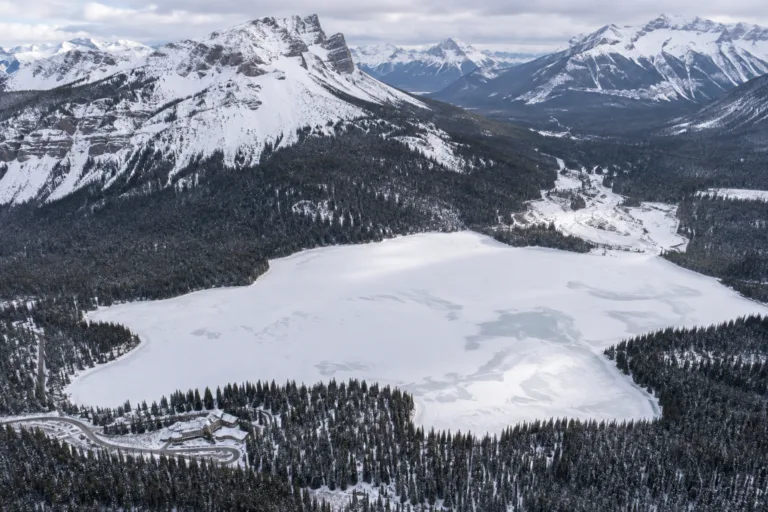
Emerald Lake Freeze
Usually Fully Freezes
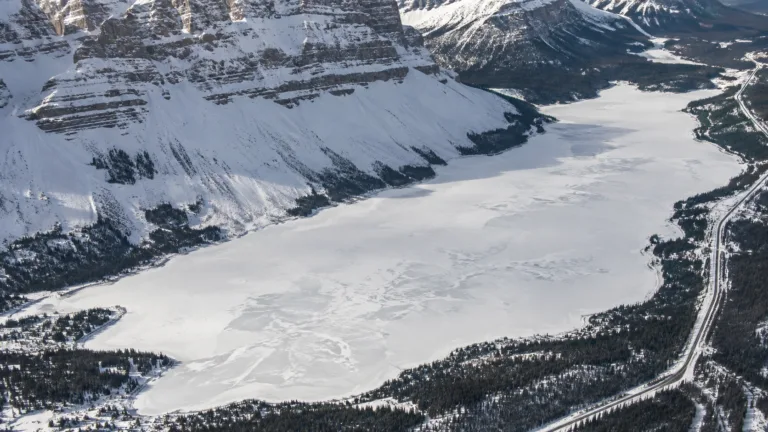
Bow Lake Freeze
Usually Fully Freezes
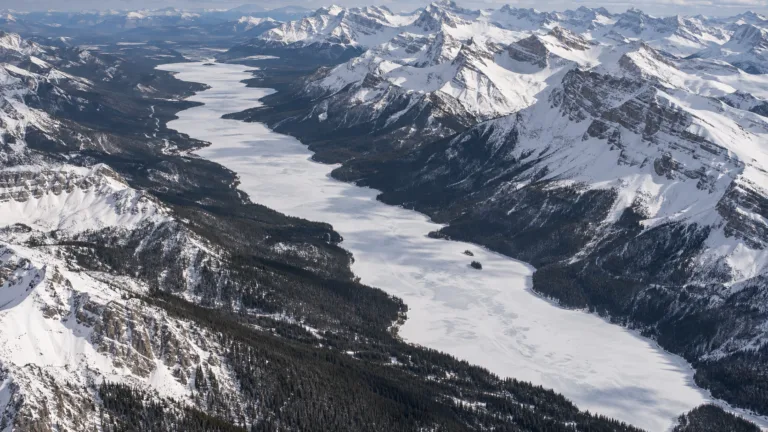
Maligne Lake Freeze
Usually Fully Freezes

Moraine Lake Freeze
Usually Fully Freezes
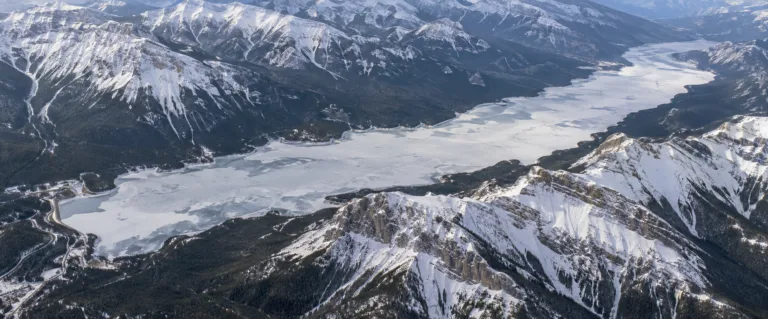
Lake Minnewanka Freeze
Usually Fully Freezes
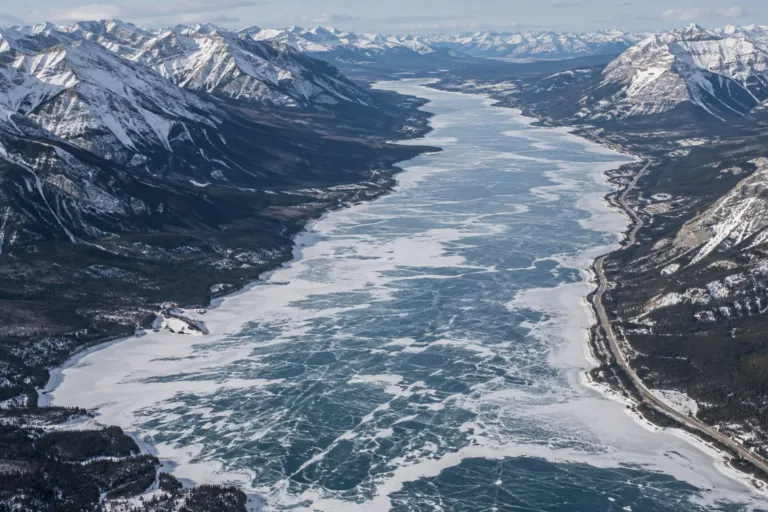
Abraham Lake Freeze
Usually Fully Freezes