
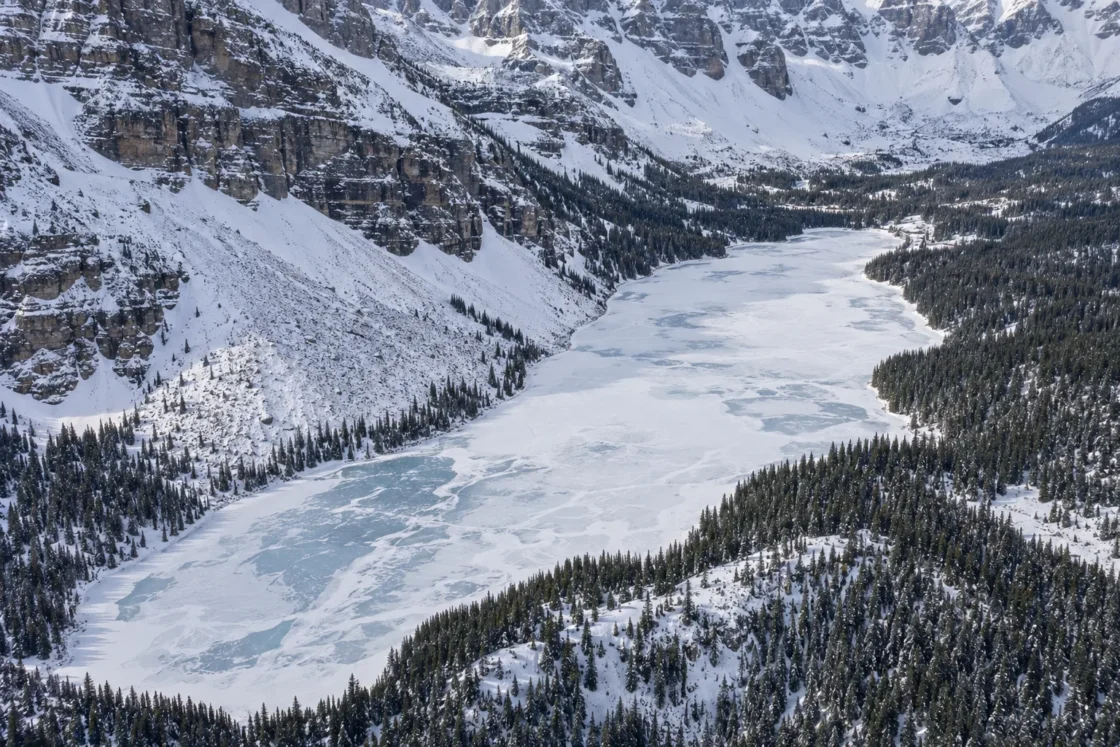
Seasonal winter ice cover with a short alpine open-water season
Historical Limnological Survey + Current Park GuidanceMayhood & Anderson (1976), Limnological Survey of the Lake Louise Area, Part 2: The LakesParks Canada — Lake Louise and Moraine LakeEvidence: ModerateAt about 1,887 m, Moraine Lake combines a high-elevation climate with a compact 41.3 ha basin and a 9.6 m mean depth, limiting heat storage compared with much larger or deeper lakes.
Where Is Moraine Lake?
Alberta · Canada
Moraine Lake on the Globe
Rotate the world or focus directly on the lake.
Measured Ice and Freeze Data
Freeze and Ice Cover Through the Year
Month-level states are shown only when supported. Unclassified months remain explicitly marked.
Evidence Behind the Freeze Profile
The 1976 lake survey estimated open water from early or mid-June to probably late October, or about 130–150 ice-free days.
Government-commissioned Limnological SurveyMayhood & Anderson (1976), Limnological Survey of the Lake Louise Area, Part 2: The LakesEvidence: HighCurrent Parks Canada guidance says Lake Louise and Moraine Lake usually melt by late May.
Current Government GuidanceParks Canada — Lake Louise and Moraine LakeEvidence: ModerateThe 1976 survey explicitly noted that it had no direct observations of Moraine Lake freeze-up dates.
Government-commissioned Limnological SurveyMayhood & Anderson (1976), Limnological Survey of the Lake Louise Area, Part 2: The LakesEvidence: HighThe same survey measured an elevation of 1,887 m, an area of 41.3 ha, a mean depth of 9.6 m and a maximum depth of 22.9 m.
Government-commissioned Limnological SurveyMayhood & Anderson (1976), Limnological Survey of the Lake Louise Area, Part 2: The LakesEvidence: HighSources
Moraine Lake develops sustained winter ice, but its autumn ice-on date is not documented with the same precision as its spring thaw. Historical limnological data point to a relatively short open-water season at this high-elevation Banff lake rather than to a single dependable freeze date.
The historical record is stronger for open water than for ice-on
A Canadian Wildlife Service limnological survey prepared for Parks Canada in 1976 estimated Moraine Lake’s open-water period as early or mid-June to probably late October, roughly 130–150 ice-free days. The same entry added an important limitation: there were no direct observations of freeze-up dates.
That distinction prevents a late-October open-water estimate from being turned into an exact annual ice-on date. Autumn cooling can produce shoreline ice, partial cover and then broader lake ice on different days, and weather can shift that sequence from one year to another. The evidence supports a regular winter ice season, but not a precise date on which 100% of the surface is covered every year.
Why this alpine basin loses its open-water season early
The 1976 survey placed Moraine Lake at about 1,887 m elevation and measured a surface area of 41.3 hectares. Mean depth was 9.6 m and maximum depth 22.9 m. Those dimensions describe a compact alpine lake with much less stored summer heat than a very large or very deep lake.
As autumn air cools the water column, the lake must lose that stored heat before stable surface ice can persist. Moraine Lake’s elevation exposes it to an early return of cold conditions, while its modest mean depth limits the volume of warmer water available to delay cooling. The measured basin geometry therefore fits the observed short open-water season, even though the survey did not record a year-by-year freeze-over date.
Spring breakup comes before the familiar high-water summer lake
Moraine Lake also has a large seasonal water-level cycle. The limnological survey reported that the water level just before spring breakup could be about 6 m or more below the high-water mark. After spring filling, the level could then decline by 2 m or more through summer.
This means the first open water of the year is not the same physical state as the well-known midsummer lake. Breakup occurs while the basin is still in its low-water phase. Snow and glacial melt later refill the lake, so the turquoise, high-water summer appearance follows the loss of ice rather than arriving at the same moment.
Why late May and early June both appear in reliable records
Current Parks Canada guidance says Lake Louise and Moraine Lake usually melt by late May. The older lake-specific survey, by contrast, placed the beginning of open water in early or mid-June. These statements should not be forced into a single exact date.
They come from different periods and use different levels of seasonal precision. Year-to-year weather and the distinction between a lake that is largely thawed and one classified as open water can shift the boundary by days or weeks. Together, the records place Moraine Lake’s normal spring transition around late May into early June, but they do not establish a long-term trend in breakup timing.
Similar Lakes by Freeze Pattern
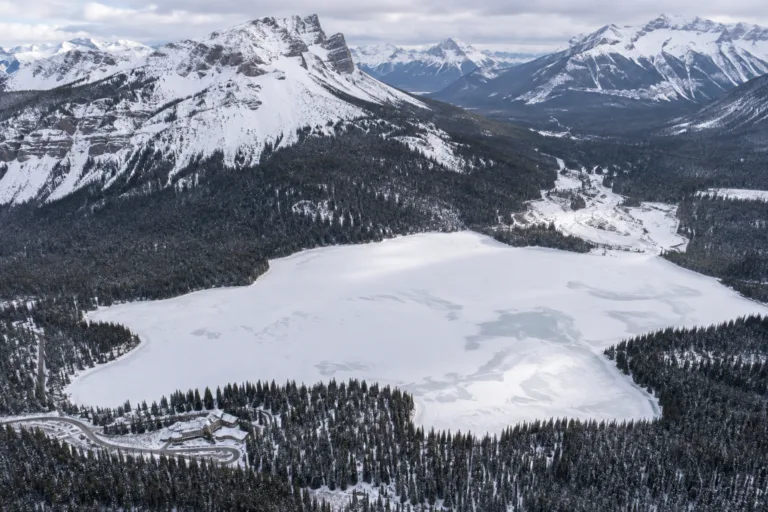
Emerald Lake Freeze
Usually Fully Freezes
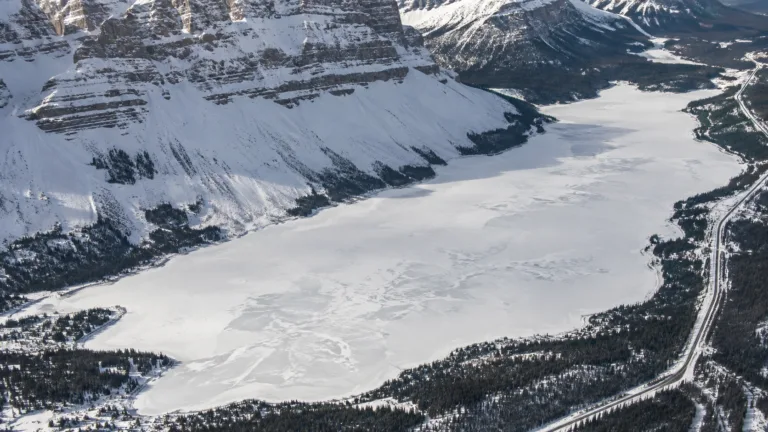
Bow Lake Freeze
Usually Fully Freezes
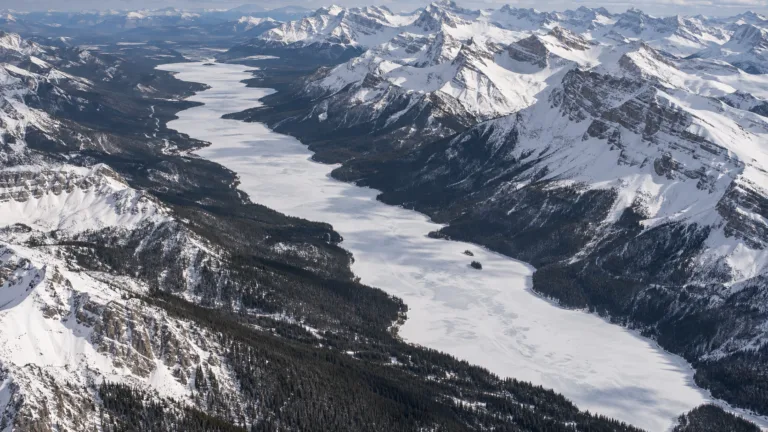
Maligne Lake Freeze
Usually Fully Freezes
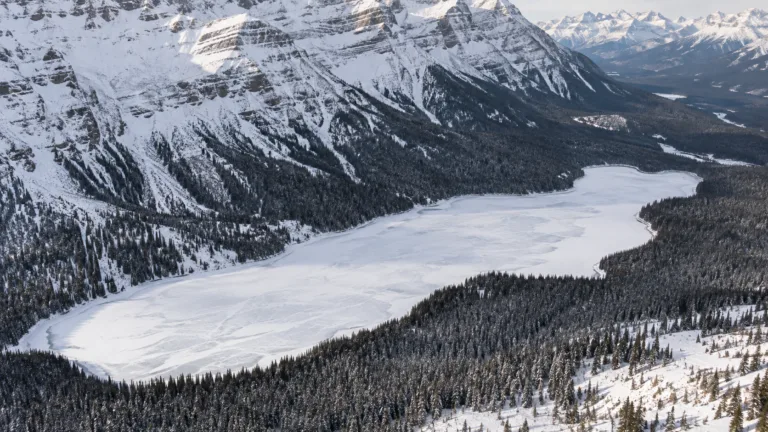
Peyto Lake Freeze
Usually Fully Freezes
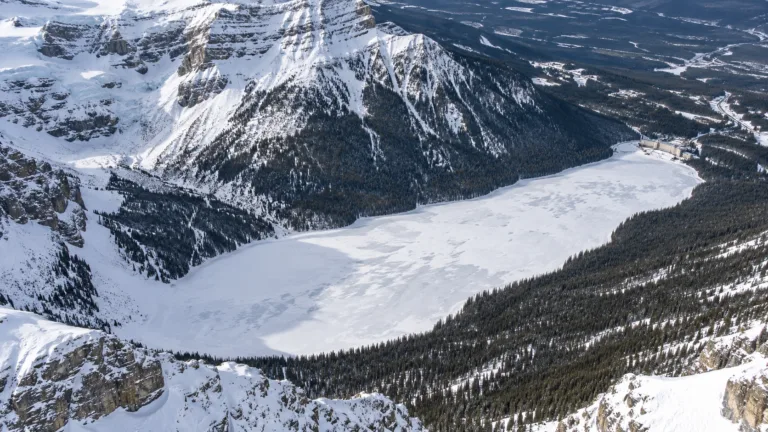
Lake Louise Freeze
Usually Fully Freezes
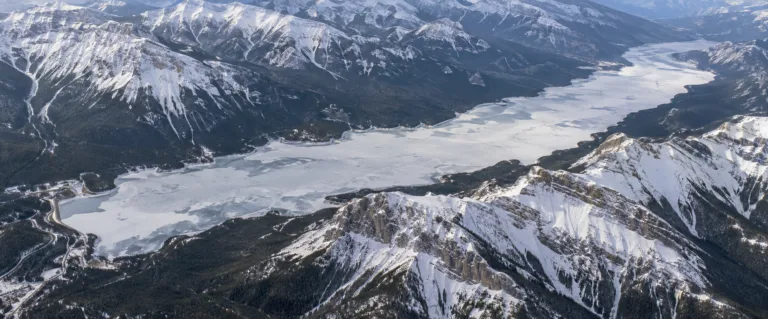
Lake Minnewanka Freeze
Usually Fully Freezes