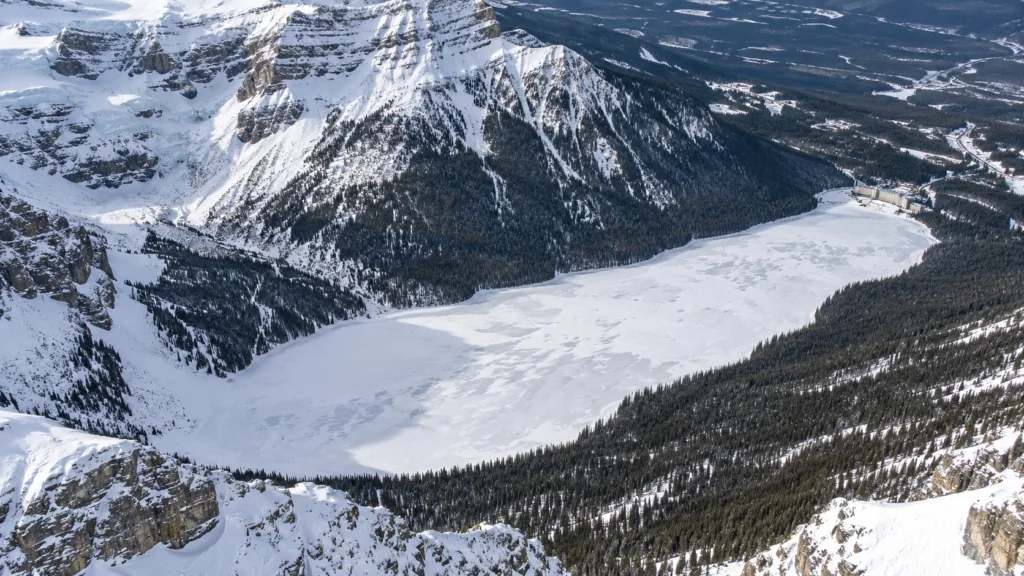
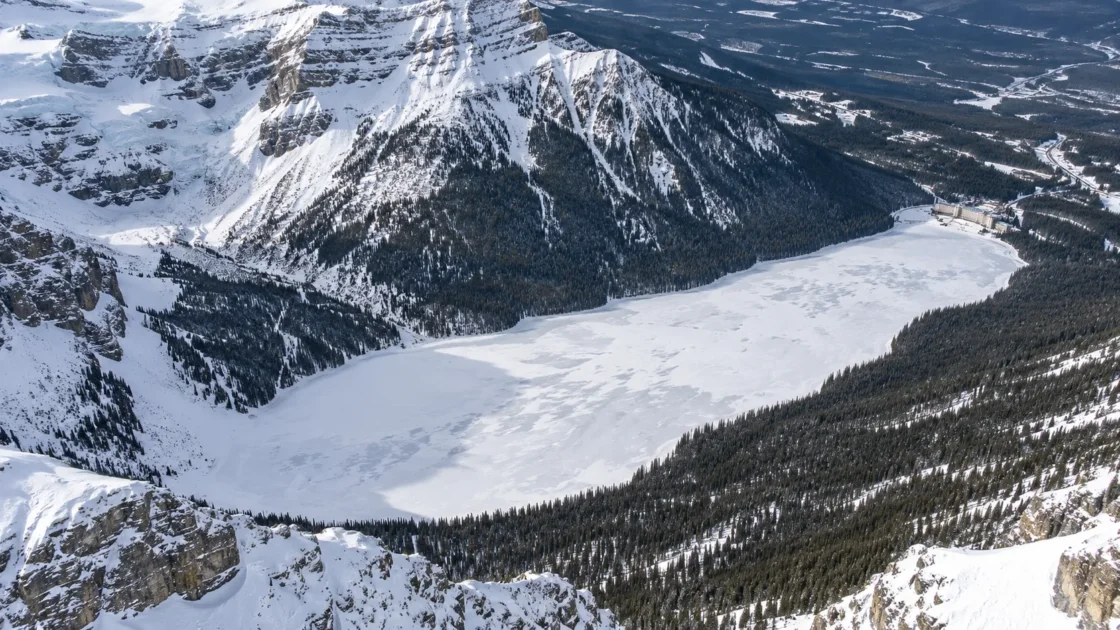
Regular seasonal full freeze-over
Official seasonal guidance and field monitoringParks Canada — Lake Louise and Moraine LakeFairmont Chateau Lake Louise — When Will Lake Louise Freeze?Alberta Lake Management Society — Winter LakeKeepers 2021–2022 ReportParks Canada — Weather Conditions in Banff National ParkParks Canada — Lake Louise Area Map and Visitor GuideEvidence: ModerateAt about 1,731 m elevation, prolonged subfreezing mountain temperatures promote full freeze-over; winter ice and snow can remain into May while deeper water stays near 4°C beneath the ice.
Where Is Lake Louise?
Alberta · Canada
Lake Louise on the Globe
Rotate the world or focus directly on the lake.
Measured Ice and Freeze Data
Freeze and Ice Cover Through the Year
Month-level states are shown only when supported. Unclassified months remain explicitly marked.
Evidence Behind the Freeze Profile
Fairmont Chateau Lake Louise describes late November, often the last week, as the typical freeze-over period and reports a November 29 freeze-over in 2024.
Local Seasonal ObservationFairmont Chateau Lake Louise — When Will Lake Louise Freeze?Evidence: ModerateParks Canada states that Lake Louise and Moraine Lake usually melt by late May.
Official Seasonal GuidanceParks Canada — Lake Louise and Moraine LakeEvidence: HighWinter LakeKeepers measured 61 cm of ice at the Lake Louise Centre site on May 16, 2022; this is a site-specific single-season measurement rather than a typical thickness.
Scientific Field MonitoringAlberta Lake Management Society — Winter LakeKeepers 2021–2022 ReportEvidence: HighFairmont Chateau Lake Louise recorded the 2025 thaw on May 26, close to Parks Canada's usual late-May timing.
Local Webcam RecordParks Canada — Lake Louise and Moraine LakeFairmont Chateau Lake Louise — Hello, Lake Louise Blue!Evidence: ModerateSources
- Parks Canada — Lake Louise and Moraine Lake
- Fairmont Chateau Lake Louise — When Will Lake Louise Freeze?
- Alberta Lake Management Society — Winter LakeKeepers 2021–2022 Report
- Natural Resources Canada — Canadian Geographical Names Database: Lake Louise
- Parks Canada — Weather Conditions in Banff National Park
- Fairmont Chateau Lake Louise — Hello, Lake Louise Blue!
- Parks Canada — Lake Louise Area Map and Visitor Guide
Lake Louise is a regular seasonal freeze-over rather than a lake that only develops shoreline ice. Full surface cover typically arrives late in November and lasts through the cold season, while breakup is usually completed around late May.
Why a 1,731-Metre Mountain Lake Freezes Over
Parks Canada places Lake Louise at about 1,731 m above sea level. The lake has enough depth to store heat below the surface, but its mountain setting brings a long cold season. For the nearby Village of Lake Louise, Parks Canada reports average overnight temperatures below freezing from November through April. Once autumn cooling removes heat from the upper water column, the surface can reach the freezing point and a continuous ice cover can form.
The winter state is not a frozen water column. A Winter LakeKeepers profile from May 16, 2022 found water temperatures near 4°C below about 3 metres while ice remained on the surface. That pattern is consistent with freshwater winter stratification: colder water and ice occupy the upper part of the lake while denser water near 4°C remains below.
Freeze-Up Is a Process Before It Becomes a Full Freeze-Over
Late November is the best-supported general freeze-over window for Lake Louise, but it should not be read as a fixed annual date. Fairmont Chateau Lake Louise describes the lake as typically freezing over in the last part of November and recorded a full freeze on November 29 in 2024.
That date refers to the lake becoming fully ice covered, not necessarily the first appearance of shore ice. During freeze-up, calm cold nights can produce ice around the margins and across sheltered patches before the remaining open water closes. Wind, snowfall, cloud cover and short warm spells can move the final freeze-over earlier or later from one year to the next.
What the May 2022 Ice Profile Shows
Lake Louise still carried substantial ice late in the 2021–2022 season. At the Lake Louise Centre site on May 16, 2022, Winter LakeKeepers recorded 61 cm of ice beneath 18 cm of snow. The same sampling event profiled a 70 m water column, with measurements extending to 63 m.
Below roughly 3 m, the water remained close to 4°C, and dissolved oxygen stayed high through the measured depth. The observation is useful because it separates surface appearance from the state of the water below: a lake can retain thick late-spring ice while most of its deeper water remains liquid and thermally stable.
The 61 cm figure is not a normal May thickness for every year or every part of the lake. It is one measured site on one date. Snow distribution, spring temperatures, wind exposure and local inflow can all produce spatial and year-to-year differences.
Breakup Usually Finishes in Late May
Parks Canada states that Lake Louise usually melts by late May. A recent local record fits that pattern: Fairmont Chateau Lake Louise reported May 26 as the 2025 thaw date. These dates describe the disappearance of seasonal lake ice, not the moment when the first open-water patches appear.
Spring breakup can accelerate once dark open water develops because it absorbs more solar energy than a snow-covered ice surface. Wind can then fracture and redistribute weakened ice. The final stage can therefore move quickly even after a long period in which the lake still looks mostly frozen.
Why the Ice Season Is Better Described as a Window
Lake Louise has a clear seasonal pattern, but exact ice-on and ice-off dates remain weather-sensitive. Late-November freeze-over and late-May melt provide useful reference points, while individual seasons can depart from them. A cold, calm autumn can close the lake sooner; a mild or windy autumn can delay full cover. In spring, snow depth, incoming warmth, solar exposure and wind affect how rapidly the ice weakens.
For that reason, the most defensible description is a recurring full winter freeze with an ice season of roughly six months, rather than a fixed calendar schedule. The measured May 2022 ice and the late-May 2025 thaw also show why a single date or thickness should not be generalized across every winter.
Similar Lakes by Freeze Pattern
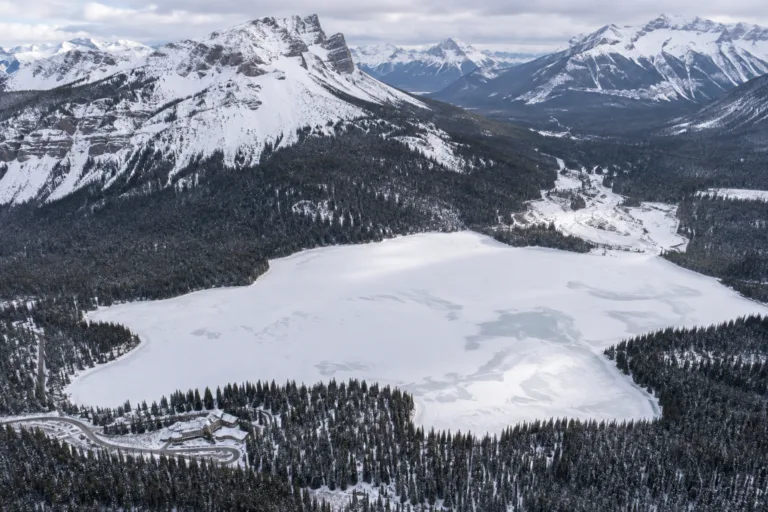
Emerald Lake Freeze
Usually Fully Freezes
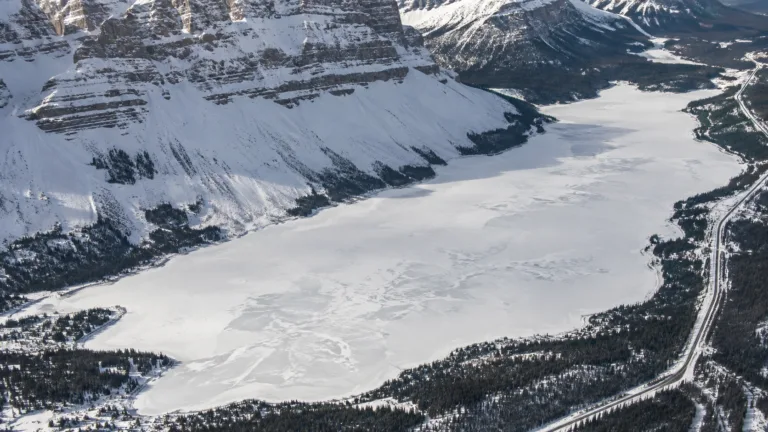
Bow Lake Freeze
Usually Fully Freezes
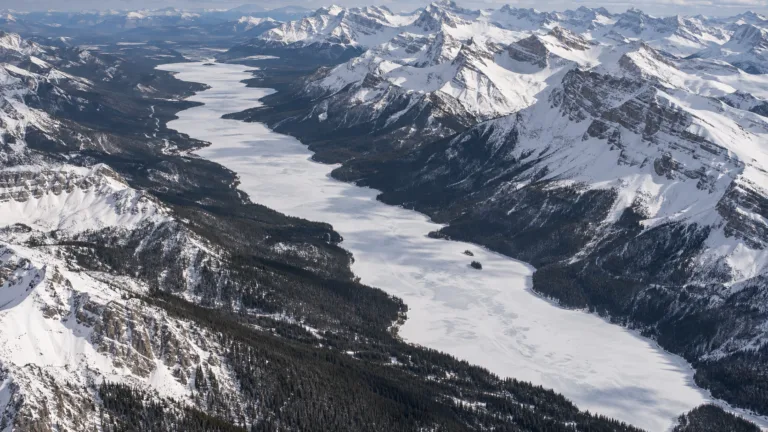
Maligne Lake Freeze
Usually Fully Freezes
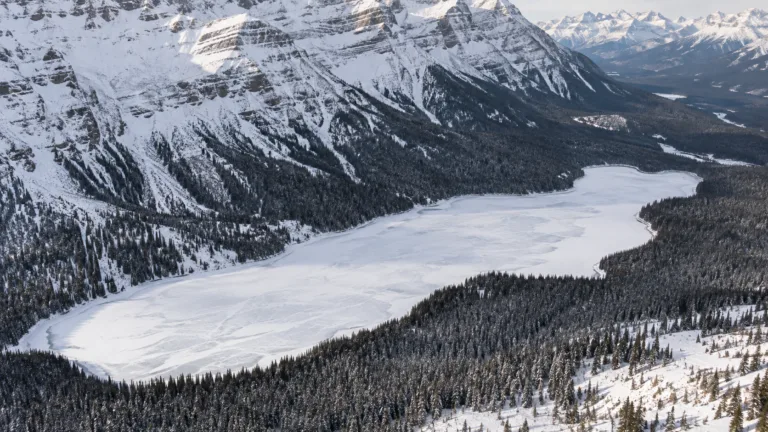
Peyto Lake Freeze
Usually Fully Freezes

Moraine Lake Freeze
Usually Fully Freezes
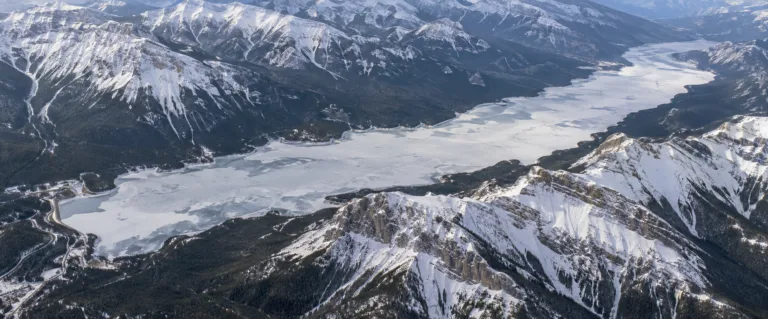
Lake Minnewanka Freeze
Usually Fully Freezes