
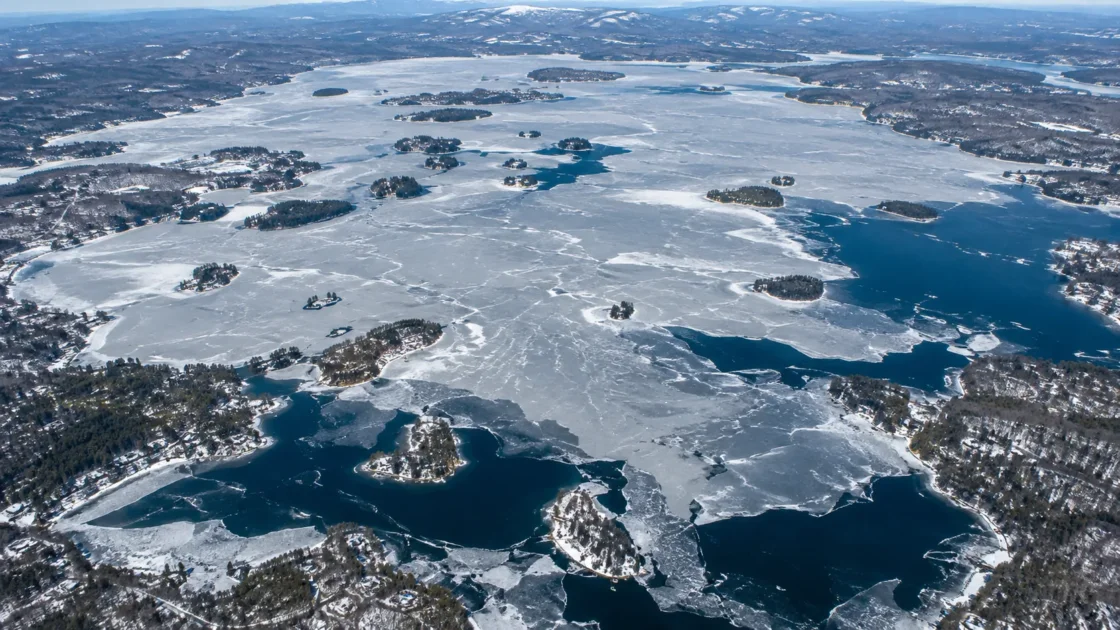
Seasonal ice cover with variable whole-lake closure
Long-term climate analysis and observed lake-ice reportingNew Hampshire Climate Assessment 2021 — University of New HampshireNew Hampshire Public Radio — Lake Winnipesaukee Ice-Out 2026New Hampshire Public Radio — Earliest Lake Winnipesaukee Ice-OutNew Hampshire Public Radio — Open Water on Lake WinnipesaukeeWMUR — Lake Winnipesaukee Ice-In 2026Evidence: ModerateThe exposed Broads are typically last to freeze. Wind and lake currents can keep water moving and disrupt new ice even during prolonged cold spells.
Where Is Lake Winnipesaukee?
New Hampshire · United States
Lake Winnipesaukee on the Globe
Rotate the world or focus directly on the lake.
Measured Ice and Freeze Data
Freeze and Ice Cover Through the Year
Month-level states are shown only when supported. Unclassified months remain explicitly marked.
Evidence Behind the Freeze Profile
The New Hampshire Climate Assessment reports an eight-day shift toward earlier ice-out from 1971–2020 and a trend of 1.5 days earlier per decade over that period.
University Climate AssessmentNew Hampshire Climate Assessment 2021 — University of New HampshireEvidence: HighThe traditional declaration is based on the M/S Mount Washington being able to reach its five ports without ice blocking the route; isolated ice may remain elsewhere.
Aerial Ice-Out ObservationEmerson Aviation — Ice Out on Lake WinnipesaukeeNew Hampshire Public Radio — Lake Winnipesaukee Ice-Out 2026Evidence: HighA 2014 aerial observation found substantial open water in the Broads after prolonged cold, while a New Hampshire Fish and Game lake biologist cited wind and current as obstacles to ice formation there.
Observed Lake ConditionsNew Hampshire Public Radio — Open Water on Lake WinnipesaukeeEvidence: ModerateIn 2024, ice-in was called on February 9, but observers reported that melting began about 24 hours later during an unusually mild winter.
Observed Seasonal RecordNew Hampshire Public Radio — Earliest Lake Winnipesaukee Ice-OutEvidence: ModerateSources
- New Hampshire Climate Assessment 2021 — University of New Hampshire
- USGS Historical Ice-Out Dates for 29 Lakes in New England, 1807–2008
- Emerson Aviation — Ice Out on Lake Winnipesaukee
- New Hampshire Public Radio — Lake Winnipesaukee Ice-Out 2026
- New Hampshire Public Radio — Earliest Lake Winnipesaukee Ice-Out
- New Hampshire Public Radio — Open Water on Lake Winnipesaukee
- WMUR — Lake Winnipesaukee Ice-In 2026
Lake Winnipesaukee develops extensive winter ice, but freezing is not uniform across the lake. Sheltered bays and port areas can close while open water persists in the Broads, so a traditional ice-in declaration should not be treated as proof that every part of the lake has continuous ice cover.
Why the Broads can remain open after other areas freeze
The Broads are one of the clearest reasons Lake Winnipesaukee does not behave like a small, sheltered pond. This exposed central part of the lake is commonly among the last sectors to lock up. Wind can keep the surface moving, break thin new ice and mix water beneath it. Lake currents add another source of motion.
A winter in 2014 showed the difference plainly. After extended cold spells, an aerial survey still found a large area of open water and questionable ice stretching through the Broads from the Gilford side toward Moultonborough. A New Hampshire Fish and Game large-lake biologist noted that cold temperatures alone were not enough: calm conditions were also needed for the surface to catch and remain frozen. He also pointed to current flow as another factor working against ice formation that season.
This spatial difference matters when describing Winnipesaukee as frozen. Ice in a bay, harbor or shoreline zone does not establish the condition of the exposed central lake.
What an ice-in call means on Winnipesaukee
The lake’s traditional ice-in designation is tied to the five ports visited by the M/S Mount Washington. Recent declarations have moved between January and early February, reflecting how strongly each winter’s sequence of cold, wind, rain and thaw can alter the timing.
The 2024 season showed how temporary that threshold can be. Ice-in was declared on February 9 after an unusually slow freeze, yet melting reportedly began only about a day later. That episode is better read as an example of winter-to-winter variability than as a normal freeze duration.
For the same reason, ice-in is not a lake-wide ice-cover percentage. A port-based declaration, a frozen sheltered bay and complete closure of the Broads describe different conditions and should remain separate.
Ice-out can be called while isolated ice remains
Lake Winnipesaukee has one of New England’s longest-known ice-out traditions. The modern call is made from aerial observations when the M/S Mount Washington could navigate to Alton Bay, Center Harbor, Meredith, Weirs Beach and Wolfeboro without winter ice blocking its route.
That definition does not require the entire surface to be completely free of ice. When ice-out was declared on April 12, 2026, ice still remained in places including Moultonborough Back Bay and Winter Harbor. Those remnants did not obstruct the vessel’s route, so the navigation threshold had already been reached.
This distinction is useful when comparing ice-out dates with satellite ice-cover measurements or photographs from a single bay. They may be describing different stages of breakup even when all observations are correct.
The spring thaw record is moving earlier
The U.S. Geological Survey compiled 122 years of Lake Winnipesaukee ice-out dates from 1887 through 2008. The historical definition was not perfectly identical across every observer and every year, although for most of the record it was associated with open navigation for the M/S Mount Washington.
A later University of New Hampshire climate assessment examined the long record through 2020 and found a clear directional change. From 1971 through 2020, Lake Winnipesaukee ice-out shifted about eight days earlier. The reported trend over those five decades was 1.5 days earlier per decade.
Year-to-year weather still produces wide variation. An early spring does not guarantee that the following year will break another record. The longer record is more informative: March 17, 2024 became the earliest recorded ice-out, while the 2026 declaration returned to April 12. The trend describes a change in the distribution of spring breakup dates, not a steady move toward an earlier date every single year.
Similar Lakes by Freeze Pattern
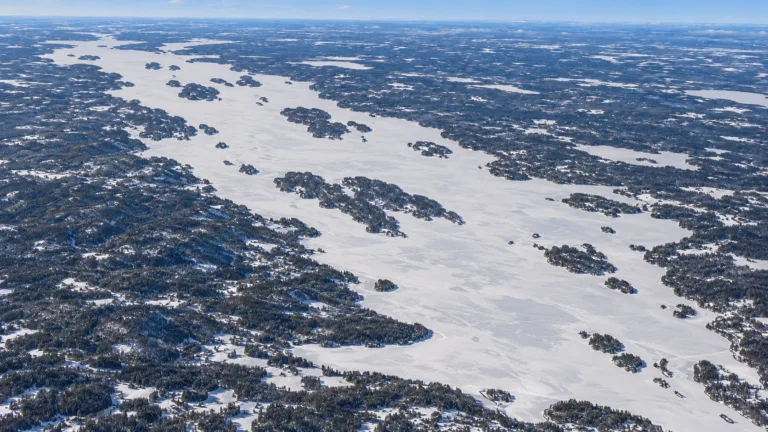
Lake Pielinen Freeze
Usually Fully Freezes
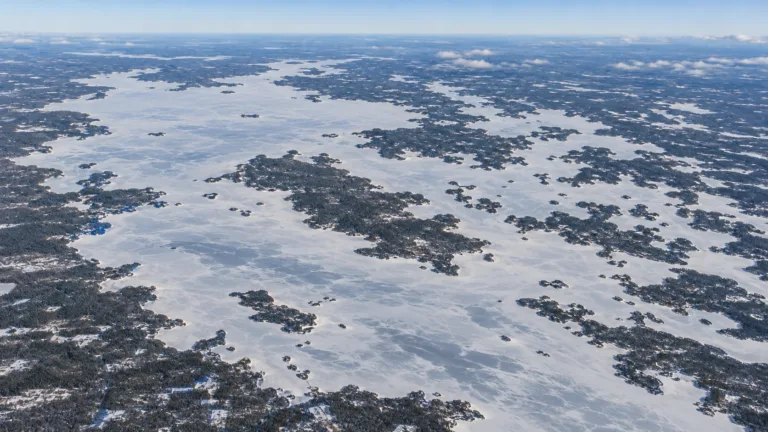
Lake Oulujärvi Freeze
Usually Fully Freezes
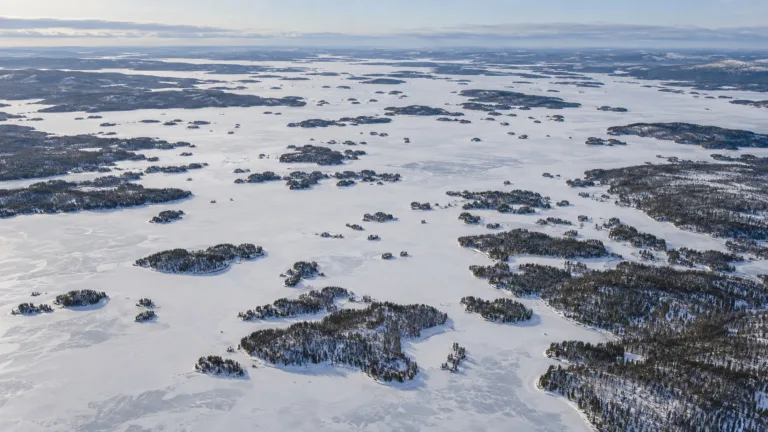
Lake Inari Freeze
Usually Fully Freezes
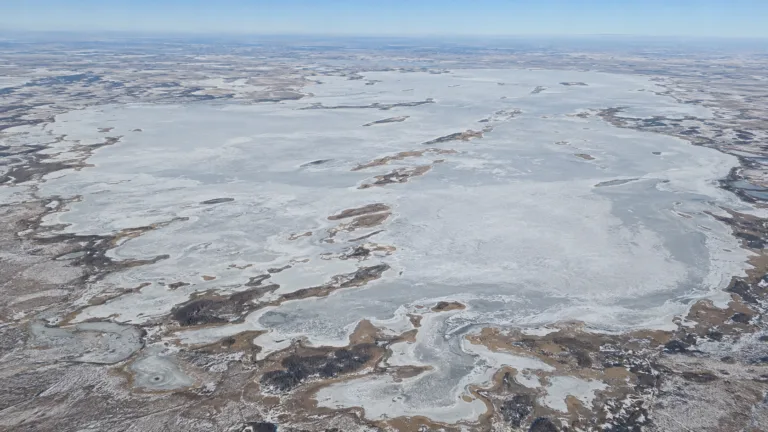
Lake Chany Freeze
Usually Fully Freezes

Lake Onega Freeze
Usually Fully Freezes

Lake Ladoga Freeze
Usually Fully Freezes