Lakes

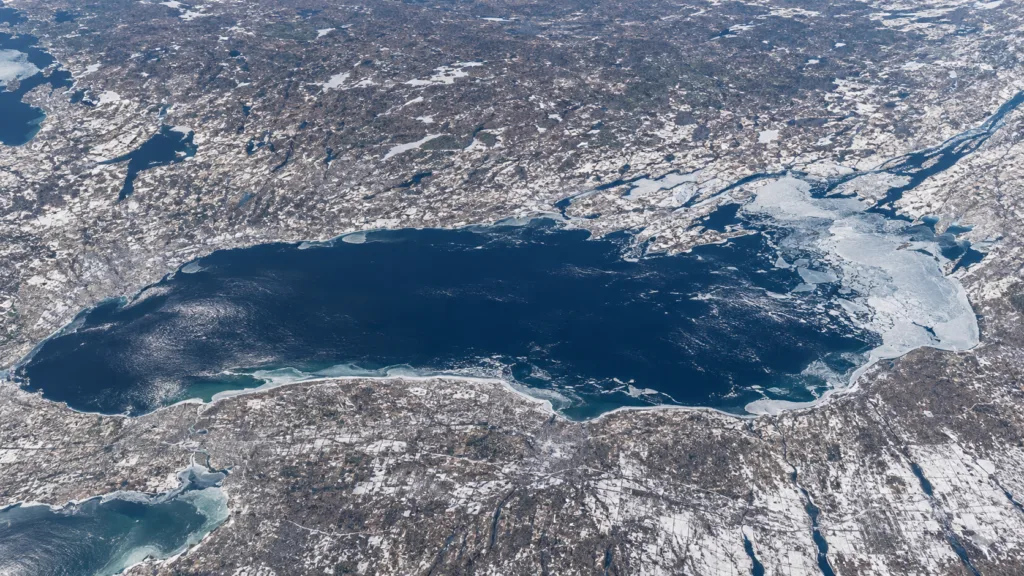
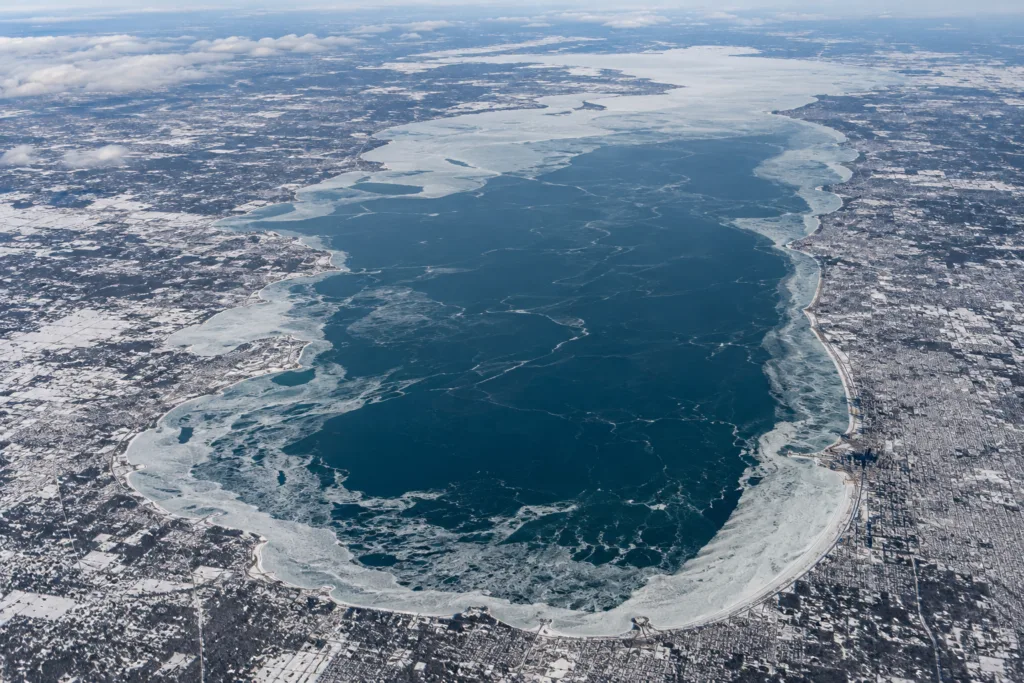
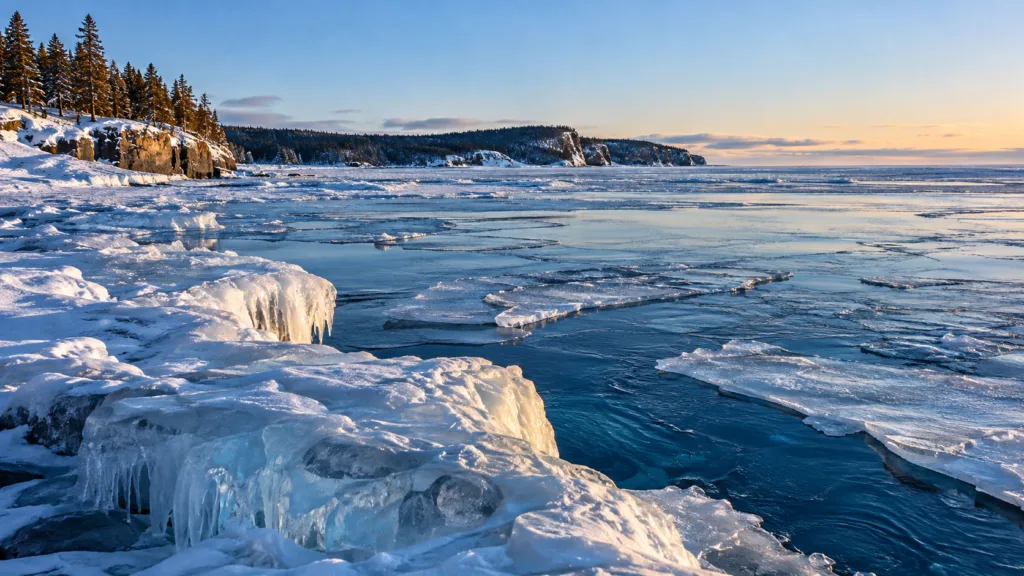
A frozen Lake Ontario showing the typical cold winter scene during the lake freeze period.

Lake Ontario Freeze

Lake Ontario develops winter ice every year, but a normal winter does not produce a lake-wide frozen surface. Ice is concentrated around shallow and sheltered water, particularly toward the eastern end, while much of the deep central lake remains open. That spatial difference is the defining feature of Lake Ontario’s freeze cycle. Why does most

Lake Ontario Freeze Read More »

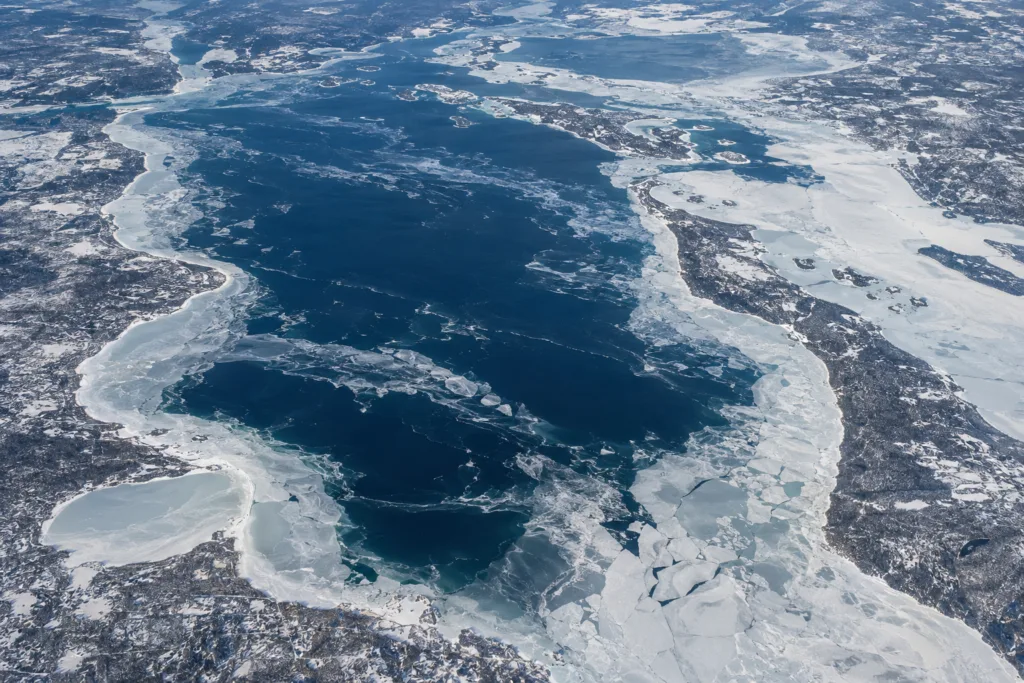
Lake Huron freeze shows the surface of the water turning solid with ice, typically occurring during cold winter temperatures.

Lake Huron Freeze

Lake Huron develops widespread winter ice, but a complete lake-wide freeze is not its normal state. Ice usually advances first through sheltered northern channels, bays, and nearshore water, while the deep central and northern open lake can remain exposed even when winter coverage is extensive. Ice builds from sheltered water toward the open lake Lake

Lake Huron Freeze Read More »

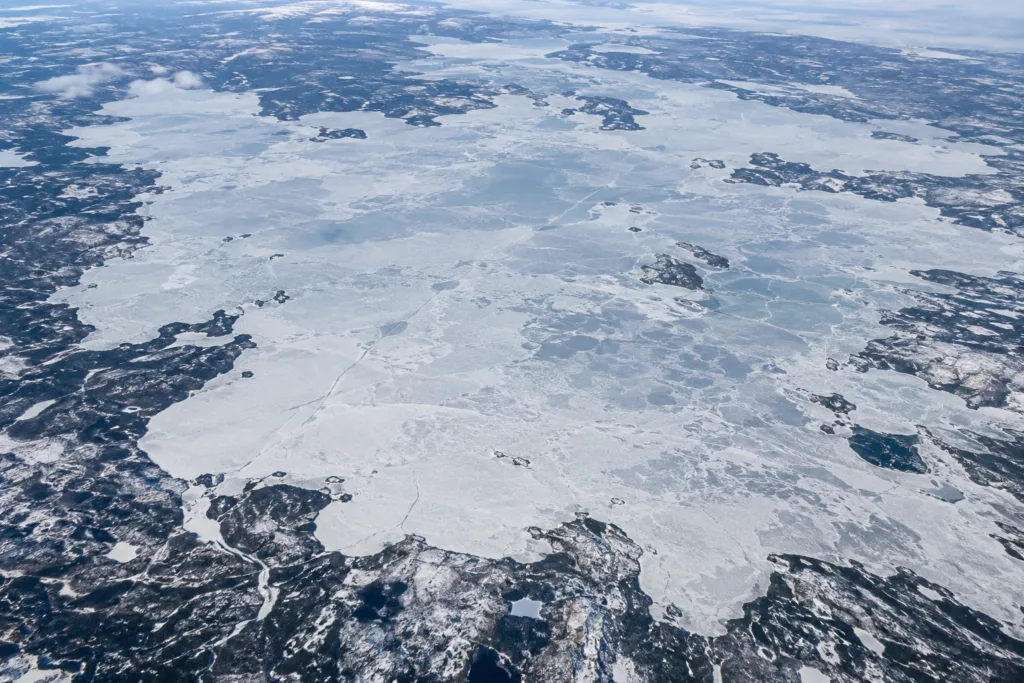
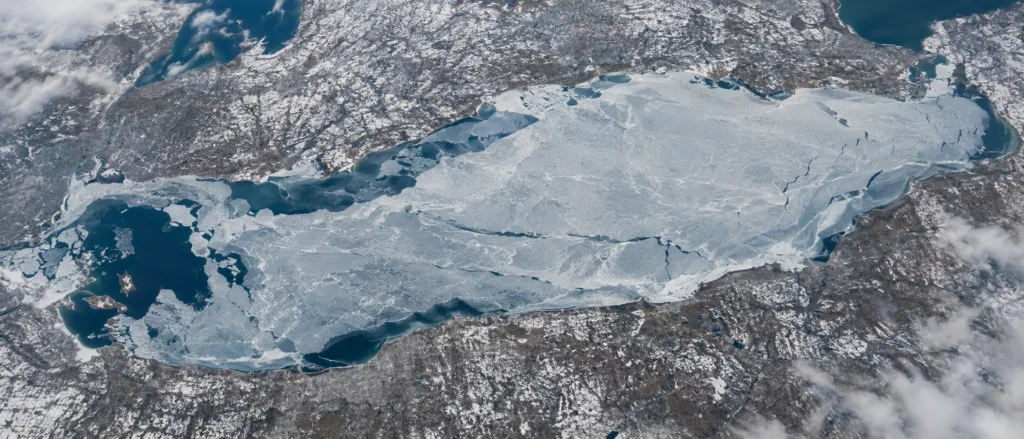
Lake Erie freeze shows a thick, icy layer forming on the surface during the coldest parts of winter.

Lake Erie Freeze

Lake Erie can develop broad winter ice faster than the deeper Great Lakes, but the lake does not behave as one uniform sheet. Its shallow western basin cools first, while deeper central and eastern waters and exposed mid-lake areas can remain more changeable as wind, waves and stored heat affect ice formation. Why Lake Erie

Lake Erie Freeze Read More »